Expedition outcome
Summit postponed - safety decision
White Expedition's first 2026 Friendship Peak batch returned safely after heavy snowfall, unstable terrain, and avalanche risk made the summit unsafe.
19 Apr 2026
White Expedition's first 2026 Friendship Peak batch returned safely after heavy snowfall, unstable terrain, and avalanche risk made the summit unsafe.
White Expedition field report / WE-2026-001
An expedition record covering the team's route, conditions, decisions, and return from the White Expedition field team.
Expedition outcome
White Expedition's first 2026 Friendship Peak batch returned safely after heavy snowfall, unstable terrain, and avalanche risk made the summit unsafe.
The account
Every mountaineering expedition has its own story. Some end with a summit, while others teach valuable lessons about patience, teamwork, and respecting the mountains.
The first White Expedition batch of the 2026 season began with high motivation as climbers from different parts of India arrived in Manali, aiming to climb Friendship Peak. Continuous heavy snowfall, unstable terrain, and avalanche conditions made the mountain unsafe.
Following our safety-first philosophy, the expedition was called off before the summit attempt. Although the team could not stand on the summit, every member returned home safely, which is always our greatest success.
Expedition log
A concise record of movement, changing conditions, training, and the safety decision that closed the expedition.
All team members arrived in Manali and checked into the hotel. The day was dedicated to preparing for the expedition.
We conducted a detailed briefing covering the itinerary, mountain safety, acclimatization, emergency procedures, and summit strategy. Every participant's climbing equipment was inspected, and those who needed additional gear completed their shopping in Manali before the climb.
The team was excited and fully prepared for the journey ahead.
The team departed from Manali at 8:00 AM in a Tempo Traveller and drove to Dhundi, the starting point of the trek. From Dhundi, the expedition began on foot.
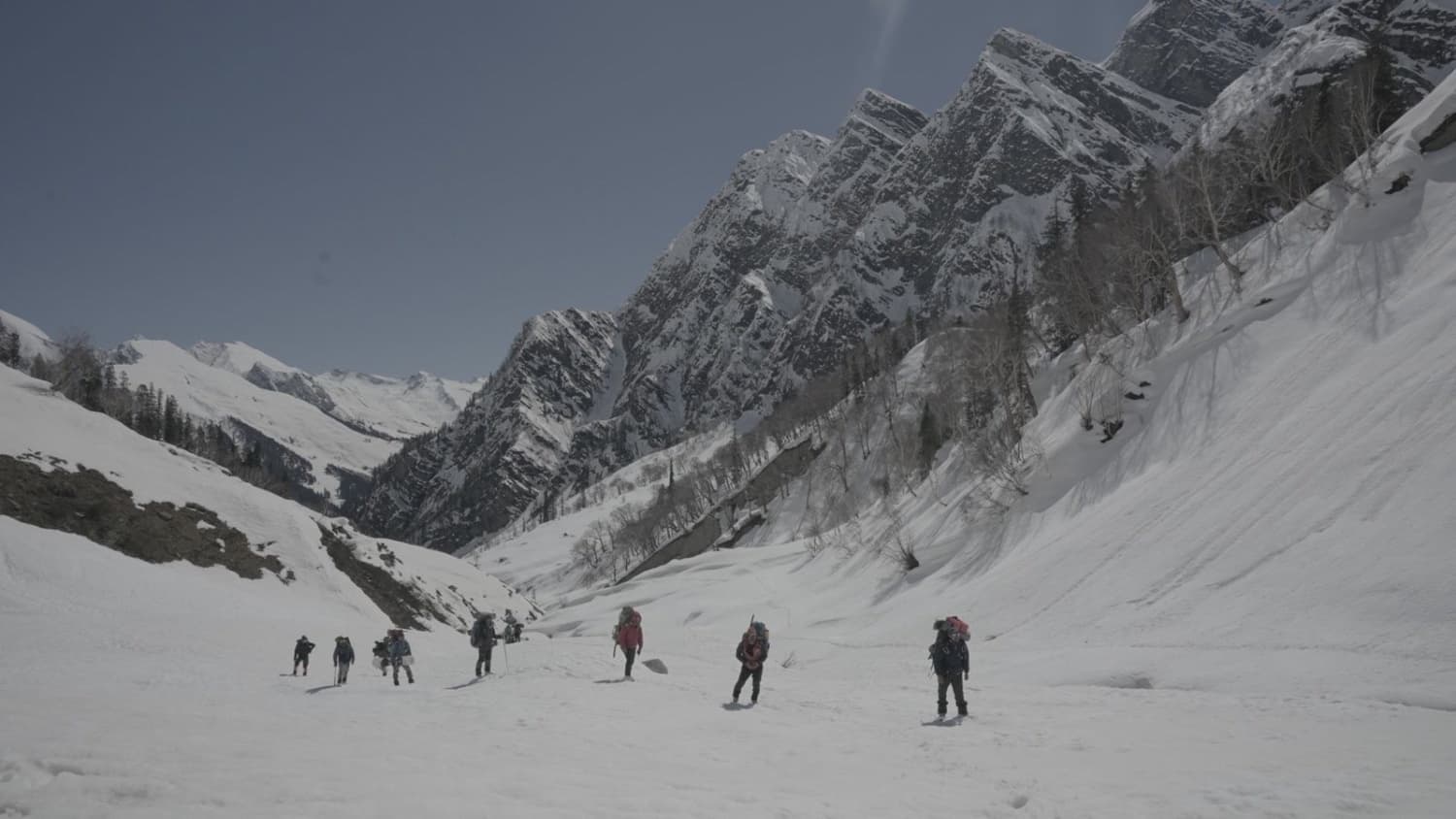
This year the mountains held an unusually large amount of snow. The trail was completely buried, forcing our guides and support team to continuously break and open the route through deep snow.
Because horses could not reach the campsite, White Expedition arranged 15 high-altitude porters to transport expedition equipment and camping supplies. Around 5:00 PM, the team reached Lady Leg Camp and established tents before nightfall.
The weather deteriorated rapidly, and continuous snowfall began soon after camp was set up. Despite the harsh conditions, everyone enjoyed a warm dinner, remained in good health, and rested for the next day's training.
The day was planned as a training and acclimatization day. Our guides conducted practical snow and glacier movement training while the weather continued to change around Lady Leg.
Fresh snow accumulated continuously, visibility reduced, and multiple avalanches were observed on the slopes near Friendship Peak. The guide team monitored snow stability, weather forecasts, avalanche activity, route safety, and overall mountain conditions throughout the day.
After evaluating all risks, the expedition leaders unanimously decided that continuing toward higher camps would expose the team to unnecessary danger. Following White Expedition's Safety First policy, the summit attempt was cancelled.
Heavy snowfall continued throughout the day. Rather than taking unnecessary risks, the team remained safely at Lady Leg Camp.
Although the summit objective was no longer possible, the team made the most of the experience by exploring the surrounding snowfields, taking photographs, enjoying the Himalayan landscape, and spending time together at camp.
Sometimes mountaineering is about accepting nature's decision with patience and respect. By evening, the final decision was made to descend the following morning.
The team began descending from Lady Leg toward Dhundi. Fresh snowfall had made several sections of the trail extremely steep and slippery.
For everyone's safety, fixed ropes were used on the most exposed sections during the descent. Thanks to disciplined teamwork and careful movement, every participant safely reached Dhundi without incident.
From Dhundi, the team returned to Manali, officially concluding the expedition.
Field notes
The details below explain the mountain context behind the team's decision to pause the summit objective and return safely.
What the mountain taught us
A successful Himalayan expedition is measured not only by a summit, but by the judgment to make the right call when the mountain says no.
Every climber returned home safely, carrying stronger technical skills, mountain experience, and a deeper understanding of responsible Himalayan mountaineering.