10 May 2026

Friendship Peak second expedition of the 2026 season

White Expedition's second 2026 Friendship Peak batch reached Only Col at 4,900m before unsafe loose snow made a safe turnaround the right decision.

White Expedition field report / WE-2026-002

A safety-first account from the mountain.

An expedition record covering the team's route, conditions, decisions, and return from the White Expedition field team.

Friendship Peak second expedition of the 2026 season
Friendship Peak 5,289mExpedition report, 10 May 2026

Expedition outcome

Turned around at Only Col - safety decision

White Expedition's second 2026 Friendship Peak batch reached Only Col at 4,900m before unsafe loose snow made a safe turnaround the right decision.

PeakFriendship Peak
Height5,289 m
RegionPir Panjal Range, Himachal Pradesh
Expedition dates4-10 May 2026
Participants7 climbers
Guide team5 certified guides
Highest pointOnly Col, 4,900 m
Final resultSafe turnaround due to unstable loose snow.
Back to expedition timeline

The account

Expedition overview

Our second Friendship Peak expedition of the 2026 season began in Manali with seven climbers, five certified mountain guides, an expedition chef, and a camp helper.

The objective was to create a safe, educational high-altitude mountaineering experience while attempting one of the Indian Himalaya's most popular trekking peaks.

The team reached Only Col at 4,900m, but deep unconsolidated snow on the upper slopes made further movement unsafe. The guides made a unanimous turnaround decision, and every participant returned safely to Manali.

Expedition log

Day by day in the field

A concise record of movement, changing conditions, training, and the safety decision that closed the expedition.

Day 1

Arrival in Manali

The team assembled in Manali for the official expedition briefing, covering the itinerary, forecast, mountain hazards, and safety protocols.

Guides inspected boots, crampons, harnesses, helmets, and technical equipment before route planning and introductions for the week ahead.

Day 2

Dhundi to Transit Camp

After an early drive from Manali to Dhundi, the team trekked approximately four hours along the Beas River valley to Transit Camp (Lohali) at around 3,300m.

An afternoon acclimatization hike and guide-led session on hydration, altitude sickness, expedition discipline, and Leave No Trace prepared the group for higher camps.

Day 3

Trek to Lady Leg Base Camp

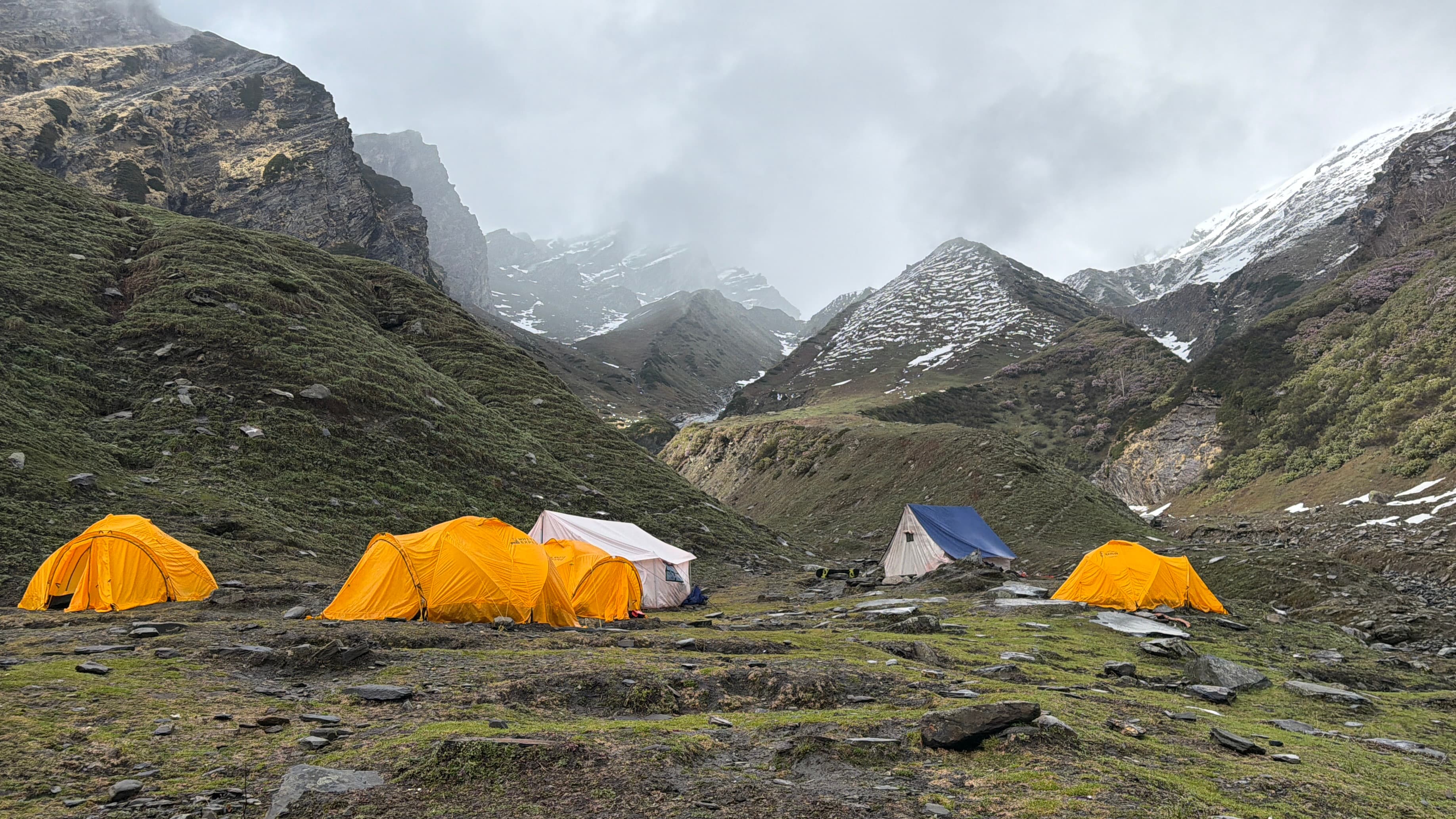
The team gained altitude through rocky terrain and lingering snow to reach Lady Leg Base Camp at 3,900m.

Guides monitored health, hydration, and acclimatization while the camp settled in beneath the Pir Panjal ridges.

Day 4

Snowcraft and mountaineering training

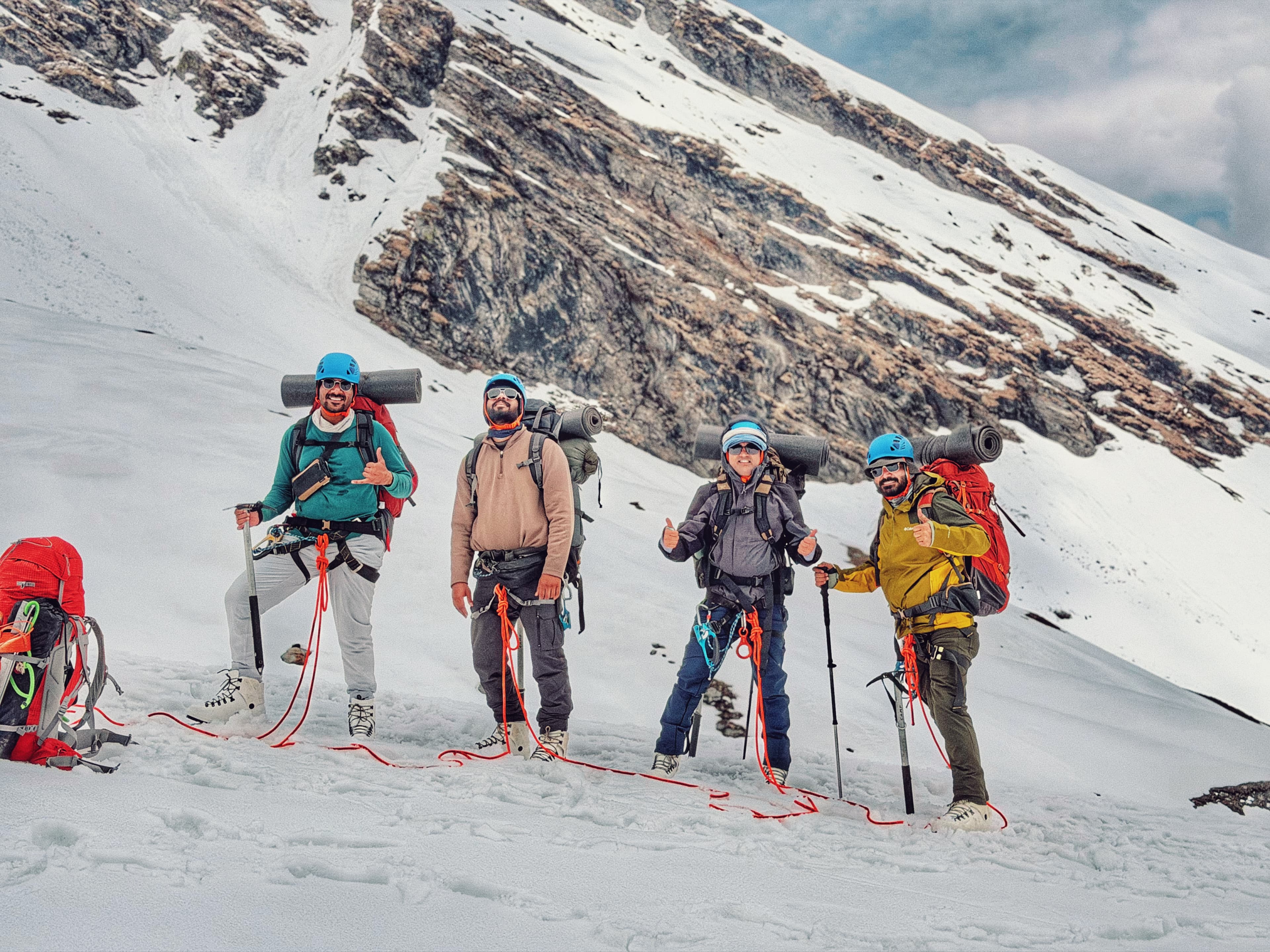
The full day was dedicated to practical instruction on nearby snow slopes under the supervision of the certified guide team.

  • Crampon use on snow and ice
  • Steep snow walking techniques
  • Ice axe handling and self-arrest
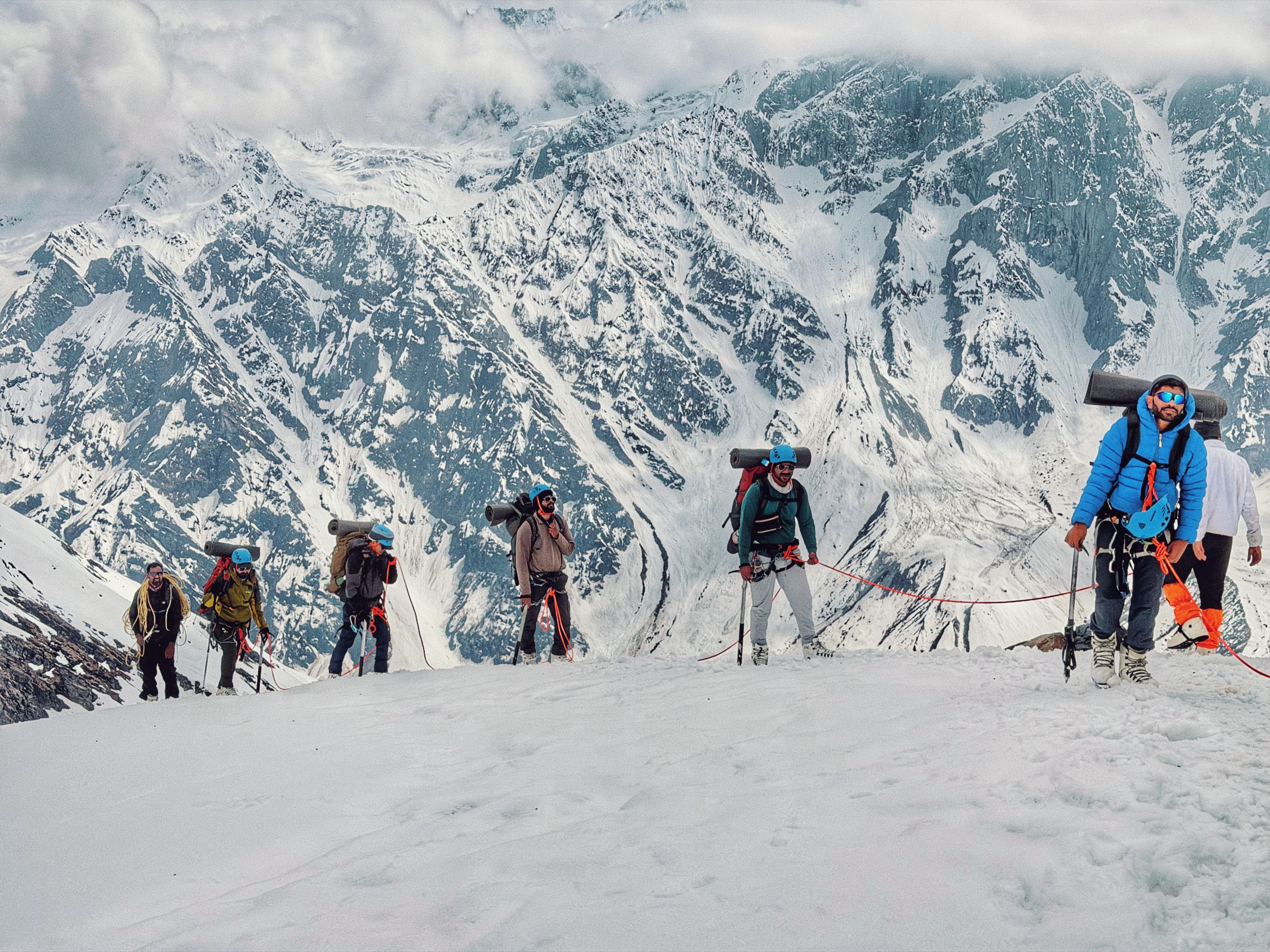
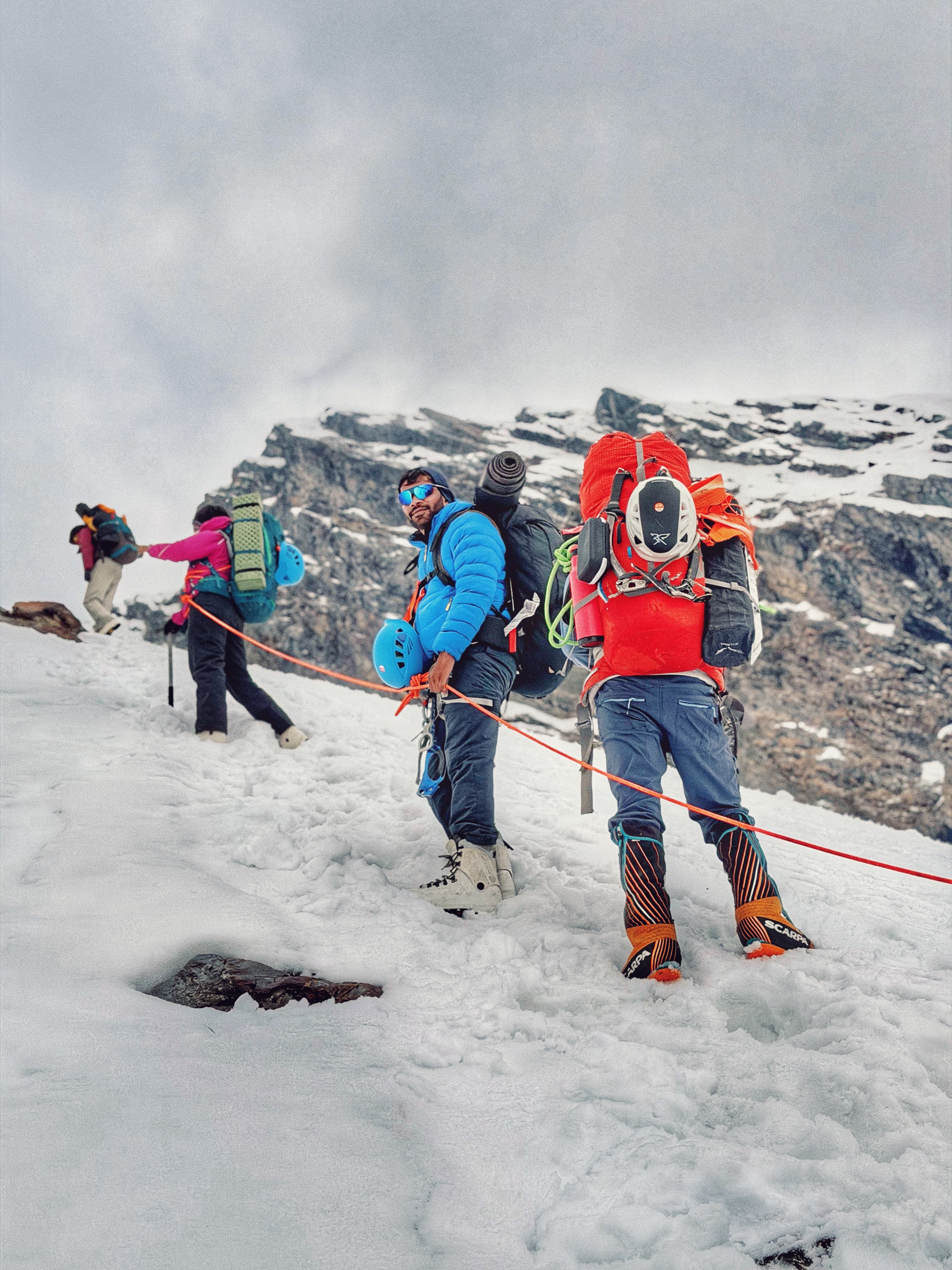
  • Rope-up procedures and glacier travel
  • Team communication and climbing discipline
Day 5

Move to Summit Camp

The team climbed to Summit Camp at 4,500m in around three hours, with views of Friendship Peak, Shitidhar Peak, Hanuman Tibba, and the surrounding Pir Panjal mountains.

After rest and hydration, equipment for the summit push was organized before an early dinner and sleep.

Day 6

Summit push and safe turnaround

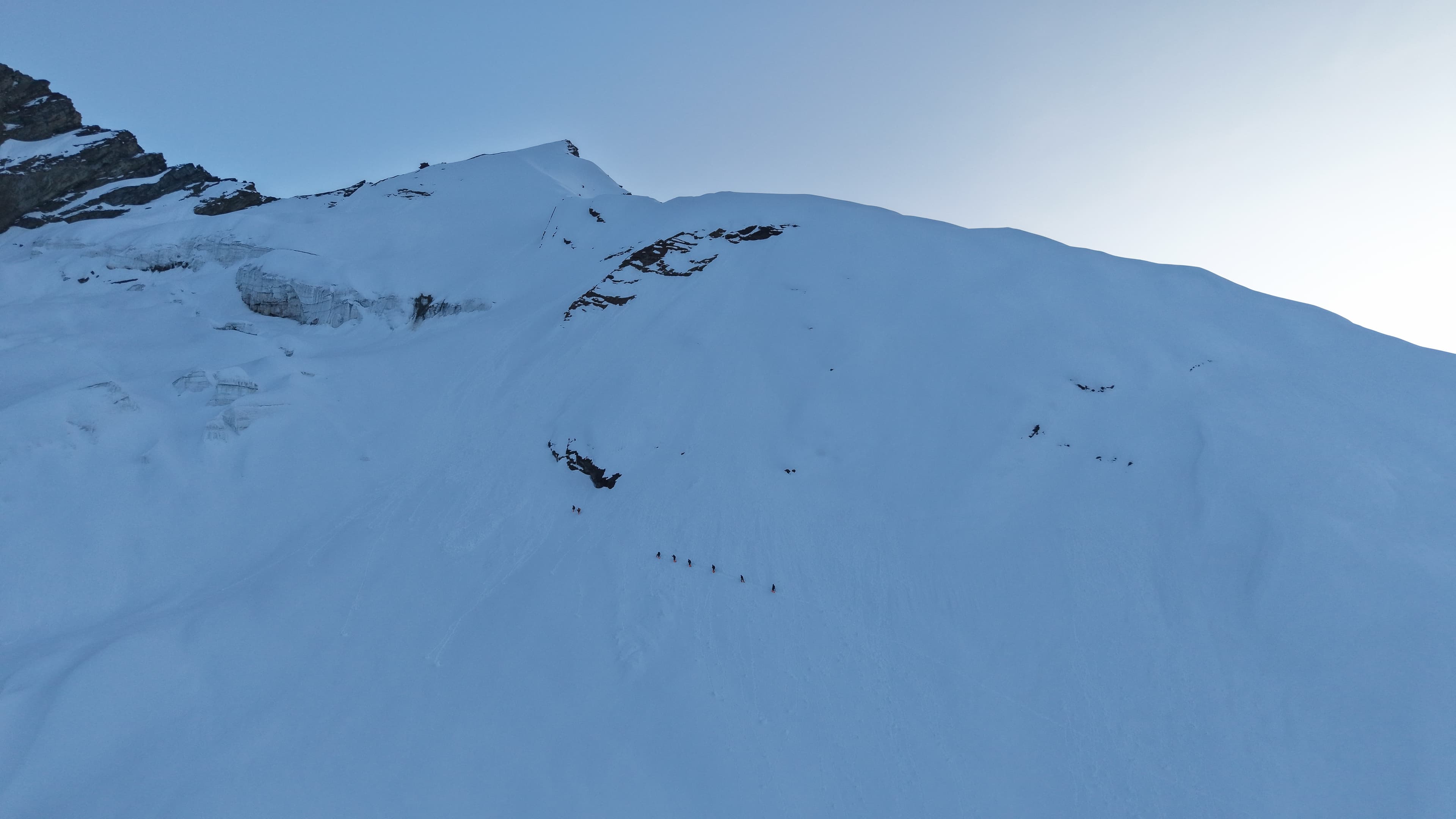
The summit attempt began at 1:00 AM. After several hours of controlled, rope-disciplined movement, the team reached Only Col at 4,900m, below the final summit ridge.

The upper slopes held deep, unconsolidated loose snow. Each step collapsed beneath the climbers, increasing the risk of slab movement and avalanche. The guide team unanimously chose to turn around.

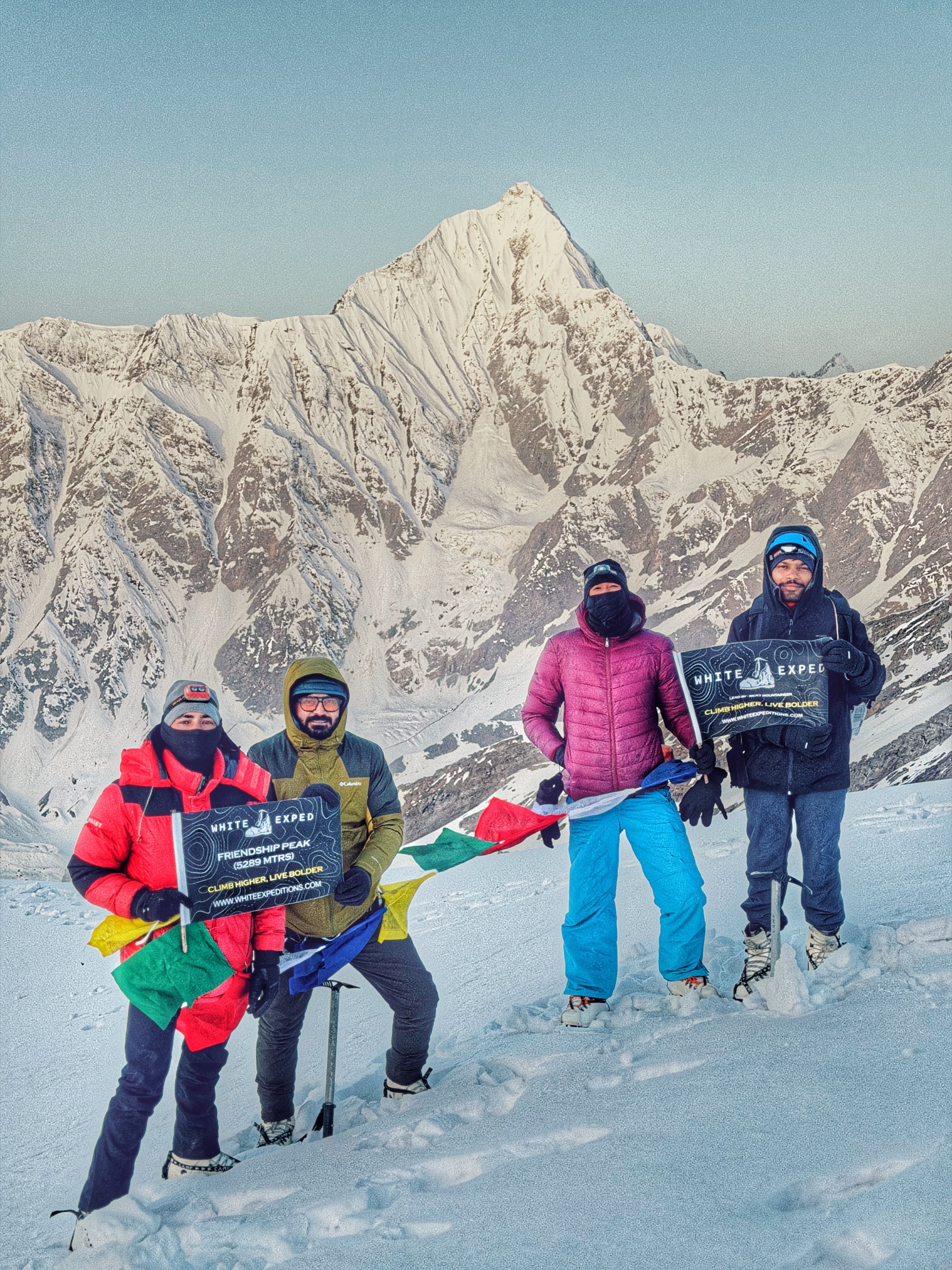
The team photographed the achievement at Only Col before descending safely to Lady Leg Base Camp.

Day 7

Return to Manali

Base camp was packed and the team trekked back to Dhundi before driving to Manali, concluding the seven-day expedition.

Every participant returned with stronger skills, memorable mountain experience, and a deeper understanding of responsible decision-making in the Himalaya.

Field notes

Conditions, challenges, and care.

The details below explain the mountain context behind the team's decision to pause the summit objective and return safely.

Expedition statistics

  • 7-day expedition; second batch of May 2026
  • 7 climbers, 5 certified mountain guides
  • 1 expedition chef and 1 camp helper
  • Highest point reached: Only Col, 4,900m
  • Safe return of every team member

Mountain conditions

  • Deep, unconsolidated loose snow on upper slopes
  • Increased slab movement and avalanche risk
  • Unsafe final approach to the summit ridge
  • Safe descent to Lady Leg Base Camp

Safety measures taken

  • Daily health, hydration, and acclimatization checks
  • Practical snowcraft and glacier movement training
  • Guide assessment of upper mountain conditions
  • Unanimous turnaround before entering unsafe terrain

What the team gained

  • Hands-on snow and alpine movement experience
  • Improved confidence with technical equipment
  • Respect for objective mountain hazards
  • A safety-first approach to future Himalayan objectives

What the mountain taught us

A successful Himalayan expedition is measured not only by a summit, but by the judgment to make the right call when the mountain says no.

Every climber returned home safely, carrying stronger technical skills, mountain experience, and a deeper understanding of responsible Himalayan mountaineering.

WhatsApp