Ice Climbing Guide
Ice climbing. Why Spiti Valley.
Discover what natural-ice climbing in Spiti Valley involves, how beginners progress in Tabo, what equipment and preparation matter, and how to plan responsibly for a Himalayan winter course.
Ice Climbing in India: The Ultimate Winter Adventure in Spiti Valley
Discover what natural-ice climbing in Spiti Valley involves, how beginners progress in Tabo, what equipment and preparation matter, and how to plan responsibly for a Himalayan winter course.
Ice Climbing in India: A Different Kind of Winter Adventure
Winter changes the Himalayas completely. Valleys fall quiet, snow covers the high desert, and flowing water can freeze into blue-white walls of natural ice.
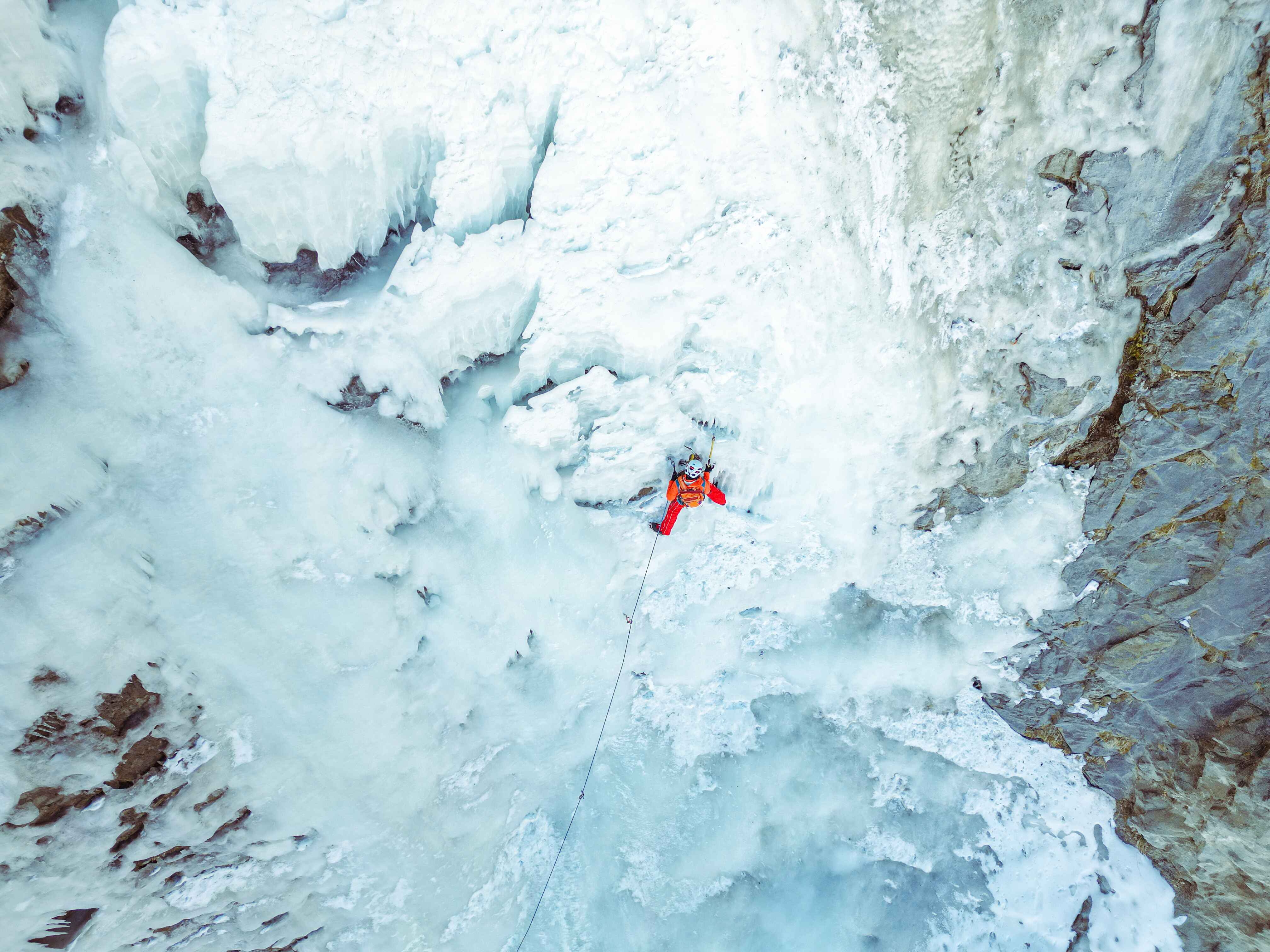
Ice climbing begins at the foot of one of those formations. You fit your crampons, clip into a rope, pick up your ice tools, and learn to trust deliberate movements: a controlled swing, a secure foot placement, a balanced stance, then the next step.
The appeal is not only the height you gain. Natural ice is constantly changing. It may be hard, brittle, textured, wet, or aerated, and every placement asks you to pay attention. The result is a technical winter activity that combines movement, equipment skills, judgment, and teamwork.
For White Expedition, Spiti Valley in Himachal Pradesh is the focus for a dedicated guided course. The current programme is based in Tabo and teaches progressively on natural ice selected for the conditions at the time.
Why Spiti Valley Works for Ice-Climbing Training
Spiti is a high-altitude Himalayan landscape shaped by deep winter cold. During suitable periods, waterfalls and watercourses around the valley can form natural ice that is usable for climbing and instruction.
The setting makes the experience feel very different from practising on an indoor wall. Climbers are learning in a real mountain environment, where temperature, sun, water flow, approach conditions, and the structure of the ice all affect the day’s plan.
That variability is also why no particular waterfall or route should be treated as guaranteed. The technical team must assess the ice, weather, approach, and participants before each session, then choose terrain appropriate for the group.
Other Himalayan regions, including Ladakh and Kashmir, can also develop winter climbing terrain. This guide focuses on Spiti because that is where White Expedition’s current dedicated ice-climbing course operates; it does not imply that courses are currently offered in every region where natural ice may form.
Tabo: From First Steps to More Technical Ice
Tabo provides the base for a progressive course rather than a one-off attempt on a frozen waterfall. A beginner’s first sessions focus on understanding equipment and learning efficient movement before the terrain becomes more demanding.
Early questions are practical:
- How should crampons be fitted and used?
- How do you hold and place an ice axe?
- Where should your feet go on the ice?
- How do you keep your weight balanced instead of pulling only with your arms?
- What commands and checks keep a rope team coordinated?
As confidence grows, instruction can progress to front-pointing, French technique, two-tool movement, top-rope climbing, belaying, rope management, rappelling, ice-quality assessment, ice screws, and basic anchors. Later sessions may introduce fixed-rope movement and rescue fundamentals when the group’s ability and current conditions allow.
This progression is important. Good ice climbing is not a contest to swing harder. It is about precise placements, relaxed movement, efficient weight transfer, and the judgment to recognise when the ice or route is unsuitable.
What Makes Natural Ice So Special?
Rock is comparatively stable; natural ice is seasonal and dynamic. A frozen formation may change between weeks, days, or even through the course of a sunny afternoon.
Climbers therefore learn to read rather than merely attack the surface. The colour, sound, texture, fractures, temperature, and water beneath or around a formation can all matter to an experienced assessment. Every season is different, and a route that exists one winter may form differently in another.
That uncertainty is part of the attraction, but it also sets a clear safety boundary: natural ice must be evaluated on the day. A published itinerary can describe the skills a course aims to teach, but it cannot guarantee a particular route, grade, or amount of climbable ice.
What You Learn on an Ice-Climbing Course
White Expedition’s current Spiti programme is designed as a seven-day technical course, including the journeys between Shimla and Tabo. It begins with acclimatization and equipment familiarisation, then builds skills through supervised practice.
Core learning areas include:
- Fitting and moving in crampons
- Ice-axe handling and placement
- Balance, body position, and weight transfer
- Front-pointing and French technique
- Top-rope climbing and belaying
- Rope management, commands, and communication
- Ice-quality assessment
- Ice screw placement and basic anchor construction
- Controlled rappelling and fixed-rope movement
- Basic self-rescue, partner rescue, and winter risk awareness
The goal is to understand how and why the systems work—not simply to borrow equipment and climb a few metres. Progress depends on individual fitness, prior experience, learning pace, and the conditions available during the course.
Essential Ice-Climbing Equipment
Technical ice climbing relies on equipment that must fit correctly and be used with instruction. The core system can include mountaineering boots, crampons, technical ice axes, a helmet, harness, ropes, carabiners, belay devices, ice screws, slings, and anchor hardware.
For the current Spiti course, essential technical climbing equipment is listed as included, subject to availability and individual requirements. Participants are still responsible for personal winter clothing and personal items. The course team provides a detailed packing list after booking so each person can confirm what is supplied and what they must bring.
Typical personal preparation includes:
- Thermal base layers and insulating mid-layers
- An insulated jacket and weatherproof outer shell
- Warm gloves plus spare or liner gloves
- Warm socks, head protection, and face covering
- Sunglasses or goggles and sun protection
- A daypack, headlamp, water bottle or thermos
- Personal medicines, toiletries, and snacks
Do not assume that ordinary trekking footwear or casual winter clothing will be enough. Equipment compatibility, fit, and cold-weather systems should be resolved before departure.
How Cold Is Spiti Valley in Winter?
Spiti can be extremely cold in winter, particularly at night. Conditions vary by date, elevation, wind, and the weather system moving through the region, so one temperature figure cannot describe every course.
Cold affects much more than comfort. It changes hydration, appetite, dexterity, recovery, battery life, equipment handling, road access, and the time a group can sensibly spend outside. Participants need suitable insulation, protected hands and feet, warm fluids, deliberate nutrition, and the discipline to report cold-related problems early.
The current programme uses local guesthouse or homestay accommodation in Tabo, normally on a double- or twin-sharing basis and subject to availability. Remote winter accommodation should not be understood as a guaranteed heated hotel room. Confirm the current rooming, heating, water, and power arrangements before booking, and prepare for simple high-altitude winter facilities.
How to Reach Tabo for the Course
The standard programme begins with a morning meeting in Shimla, travels by road to Tabo, and returns to Shimla on the final day. Travellers arriving from elsewhere in India normally need to reach Shimla separately.
Winter roads in Himachal Pradesh can be affected by snow, ice, closures, traffic, and local advisories. Travel time and even the usable approach may change. Keep flexibility around onward connections, follow current authority guidance, and verify the meeting plan with the operations team before committing to tightly timed tickets.
The remoteness is part of what makes Spiti memorable, but it also makes conservative planning essential. A winter itinerary is a working plan, not a promise that roads and weather will behave exactly as expected.
A Typical Day on Natural Ice
A training day starts with conditions rather than a stopwatch. The technical team reviews the weather and planned site, checks the equipment, and travels to the selected natural-ice area.
At the formation, instructors assess the ice and explain the session. Beginners may rehearse stance, footwork, axe placement, and belaying on introductory terrain. As movement becomes more confident, the group can work on cleaner placements, better weight transfer, and longer or steeper sections appropriate to the day.
The first few metres often feel unfamiliar. Mountaineering boots and crampons change how you stand, while ice tools create a new movement pattern for the upper body. With coaching and repetition, climbers begin to rely less on arm strength and more on stable feet, balance, and deliberate rhythm.
At the end of the session, the team returns to Tabo to eat, recover, dry equipment, and prepare for the next day. The exact sequence may change when ice, weather, roads, or participant safety require it.
Ice Climbing as Preparation for Bigger Mountains
Ice climbing can be a valuable part of mountaineering development. It helps climbers become more comfortable in crampons, improve ice-axe technique, communicate within rope systems, manage equipment with gloved hands, and conserve energy in cold conditions.
Those skills can support future Himalayan objectives, but a short course does not by itself qualify someone for a 6000m or more technical expedition. High-altitude experience, fitness, glacier travel, snow skills, acclimatization, rescue knowledge, and objective-specific preparation still matter.
Think of the course as one step in a longer progression. It can reveal strengths, expose gaps, and give a climber a much clearer idea of what technical winter movement actually feels like.
Who Can Join?
The Spiti course is designed for beginners through intermediate climbers, subject to the programme’s physical and medical requirements. It can suit:
- A beginner seeking a structured first experience on natural ice
- A rock climber transferring movement skills to winter terrain
- A trekker ready to add crampon, ice-tool, and rope experience
- An aspiring mountaineer preparing for larger Himalayan objectives
- An experienced climber refining efficiency and technical systems
Previous ice-climbing experience is not mandatory, but fitness, comfort with cold, willingness to learn, and honest communication are essential. Anyone with health concerns or uncertainty about altitude and cold exposure should discuss suitability before booking and seek appropriate medical advice.
Best Time for Ice Climbing in Spiti
Ice climbing is seasonal. The current Spiti course identifies January and February as its operating window, but suitable ice still depends on temperature, snowfall, water flow, aspect, sun exposure, and short-term weather.
The safest available training area may therefore differ from one departure to the next. The technical team may modify or cancel a session when the ice, route, approach, road, or weather is unsuitable.
That is not a failure of the plan. It is a basic principle of responsible Himalayan climbing: the mountain decides what is possible on the day.
Frequently Asked Questions
Is ice climbing in Spiti suitable for beginners?
Yes, the current course begins with equipment familiarisation, crampon movement, ice-axe placement, body position, belaying, and rope fundamentals. Progression depends on fitness, learning pace, and current ice conditions.
Do I need previous climbing experience?
No previous ice-climbing experience is required for the beginner pathway. Rock climbing, trekking, or mountaineering experience can help, but it does not replace the course briefing and technical instruction.
What technical equipment is provided?
The course lists essential technical gear including crampons, ice axes, harnesses, helmets, ropes, carabiners, belay devices, ice screws, and anchor hardware, subject to availability and individual requirements. Confirm sizing and the final equipment list before departure.
What accommodation is included?
The current programme lists six nights in a local guesthouse or homestay in Tabo, normally on double or twin sharing and subject to availability. Ask about the current heating, water, electricity, and rooming arrangements before booking.
How do I reach the course?
The standard itinerary includes transport from Shimla to Tabo and back to Shimla. Travel to Shimla is separate. Winter road conditions can affect timings and access, so confirm the meeting instructions and keep onward plans flexible.
Is a particular waterfall or climbing grade guaranteed?
No. Natural ice changes with temperature, water flow, sun, snowfall, and weather. The technical team selects the safest suitable location and adjusts the session to current conditions and participant ability.
Will this prepare me for a Himalayan expedition?
It can build useful crampon, ice-tool, rope, cold-management, and movement skills. It is one part of expedition preparation, not a substitute for altitude experience, fitness, acclimatization, glacier skills, or objective-specific training.
Take Your First Swing Responsibly
Ice climbing in Spiti is memorable because it brings together a remote Himalayan winter, changing natural formations, precise technical movement, and the satisfaction of learning something entirely new.
Arrive ready to learn rather than expecting a guaranteed route. Prepare carefully for cold. Treat the itinerary as flexible. Let the instructors assess the ice. With those expectations in place, the first controlled swing of an ice axe into a frozen waterfall can become the beginning of a much longer mountain journey.