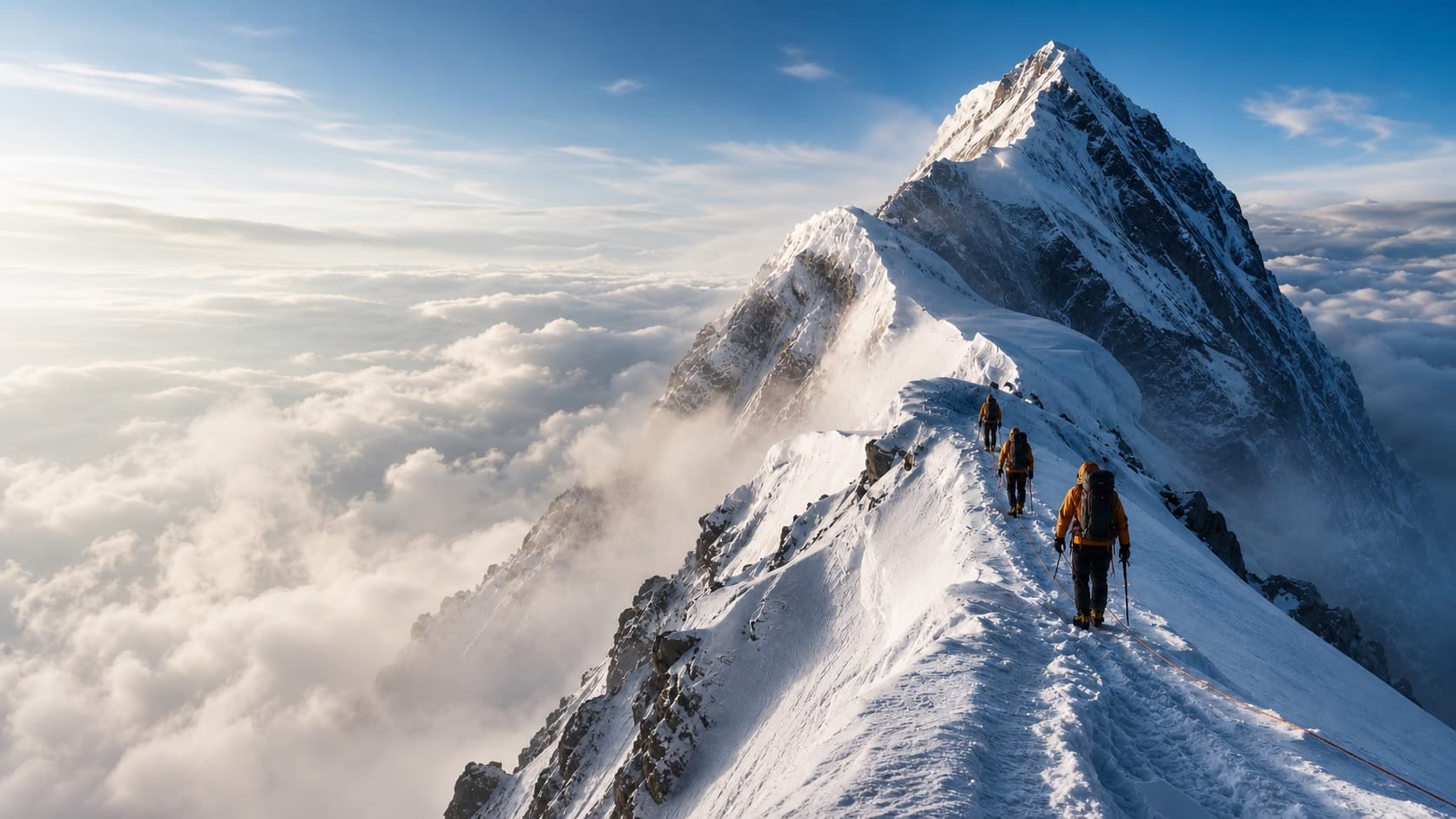
Winter Expedition Guide
Winter expeditions. India, 2026–2027.
Explore White Expedition’s 2026–2027 winter programme: 6000m climbs in Ladakh, ice-climbing training in Spiti Valley, and ski or snowboard progression in Gulmarg.
Winter Expeditions 2026–2027: Climbing, Ice & Snow in the Indian Himalayas
Explore White Expedition’s 2026–2027 winter programme: 6000m climbs in Ladakh, ice-climbing training in Spiti Valley, and ski or snowboard progression in Gulmarg.
Winter Expeditions 2026–2027 in the Indian Himalayas
Winter in the Himalayas is not simply another season. It is a different mountain environment: colder, quieter, more demanding, and deeply rewarding for climbers who arrive prepared.
White Expedition’s 2026–2027 winter programme brings together high-altitude climbing, 6000m objectives, technical ice-climbing training, skiing, and snowboarding across Ladakh, Spiti Valley, and Gulmarg. The aim is not only adventure. Winter can also be a classroom for building the skills, experience, and confidence required for bigger Himalayan objectives.
The current programme includes Winter Kiager Ri, Winter UT Kangri, Winter Chama Ri, a winter or on-request pathway for Kang Yatse II, the Spiti Valley Ice Climbing Course, and the Gulmarg Ski & Snowboard Course. Each option asks something different of the participant, so the right choice depends on experience, fitness, technical goals, and comfort in cold mountain conditions.
Winter in the Himalayas: A Different Mountain Experience
During the warmer climbing season, Ladakh and the wider Indian Himalayas attract trekkers, climbers, and expedition teams from around the world. Winter changes the character of the terrain.
Temperatures fall, snow and ice cover the mountains, approaches become more demanding, and everyday systems—from hydration to glove management—require more attention. Movement can be slower, equipment behaves differently, and the margin for poor decisions becomes smaller.
For experienced mountaineers, these conditions create an opportunity to develop:
- Cold-weather clothing and equipment systems
- Crampon and ice-axe technique
- Rope-team movement and communication
- Snow and ice travel
- High-altitude camp routines
- Energy, hydration, and recovery strategies
- Judgment when weather or terrain changes
Winter objectives are therefore about more than a summit photograph. They reward preparation, teamwork, conservative decision-making, and the ability to adapt a plan to actual mountain conditions.
Winter Kiager Ri: A Serious 6000m Objective in Ladakh
Winter Kiager Ri rises to approximately 6,100 metres in Ladakh and offers a serious step into high-altitude winter mountaineering.
At this altitude, the combination of cold, snow, technical terrain, and reduced oxygen is very different from conventional trekking. Climbers need appropriate fitness, acclimatization, previous mountain experience, and the ability to look after themselves in freezing conditions.
A winter ascent is not only about reaching the top. The complete experience includes equipment preparation, efficient movement, hydration, pacing, camp discipline, and responsible decisions about weather, route conditions, and turnaround times.
For climbers planning larger Himalayan expeditions, Kiager Ri can provide valuable experience operating in a demanding high-altitude environment. The focus remains on learning how to work with the mountain rather than forcing a rigid summit plan.
Winter UT Kangri: Progressing into High-Altitude Winter Climbing
Winter UT Kangri, approximately 6,070 metres, is another Ladakh objective for climbers seeking real winter mountaineering experience.
The climb combines altitude, severe cold, snow-covered terrain, and expedition routines. For people who already have experience at lower altitudes and want to progress towards higher mountains, a winter 6000m expedition can become an important learning step.
White Expedition approaches the mountain through acclimatization, preparation, teamwork, and plans that remain responsive to conditions. The goal is not merely to collect a summit. It is to develop the judgment and experience needed to become a stronger, more self-aware mountaineer.
Winter Chama Ri: A Compact First 6000m Progression
Winter Chama Ri, approximately 6,050 metres near Korzok, is the compact progression option in the winter programme. It is intended for fit trekkers and aspiring mountaineers building experience with altitude, cold, pacing, and summit-day discipline.
Its shorter format does not make altitude above 6,000 metres easy. Participants still need sound fitness, careful acclimatization, responsible layering and hydration, and the ability to follow conservative turnaround decisions.
For someone moving from high-altitude trekking towards a first winter 6000m objective, Chama Ri can provide a structured introduction before longer or more technical expeditions.
Kang Yatse II in Winter: Training for Bigger Mountains
Kang Yatse II, at approximately 6,250 metres, is one of Ladakh’s most recognised climbing objectives. The standard expedition and any winter or on-request plan must be understood separately: winter conditions can change the level of commitment, terrain, logistics, and preparation required.
For appropriately experienced climbers, a winter programme can help develop:
- Crampon movement on snow and ice
- Ice-axe technique
- Rope management
- Snow and glacier travel
- High-altitude camp routines
- Cold-weather equipment systems
- Acclimatization strategies
- Efficient movement at altitude
- Expedition teamwork and decision-making
This experience can support future objectives in the Himalayas, Karakoram, Alps, and other high mountain ranges. It should still be approached as a serious mountain programme whose route and continuation depend on conditions and the expedition team’s assessment.
Ice Climbing in Spiti Valley
High-altitude expeditions and ice climbing overlap, but they require different technical skills. The dedicated Spiti Valley Ice Climbing Course focuses on movement and systems for natural ice rather than a summit objective.
During suitable winter conditions, waterfalls and mountain faces in Spiti can form climbable natural ice. The technical team selects the training location according to current ice, weather, water flow, approach, and participant conditions.
The course progresses through skills such as:
- Crampon fitting and movement
- Ice-axe handling and placement
- Front-pointing and French technique
- Balance, body position, and efficient movement
- Top-rope climbing and belaying
- Rope management and climbing communication
- Ice-quality assessment
- Ice screw placement and basic anchors
- Rappelling and fixed-rope movement
- Basic self-rescue and partner rescue
- Winter safety and risk awareness
Spiti’s cold environment is part of the learning. Climbers practise managing gloves and tools, conserving energy, communicating clearly, and moving efficiently while wearing crampons.
For mountaineers preparing for larger objectives, ice climbing can strengthen technical movement and confidence. For beginners, the course provides a progressive introduction without presenting the programme as a summit expedition.
Skiing and Snowboarding in Gulmarg
Winter in the Himalayas is not only about climbing. Snow also creates a different way to explore the mountains through skiing and snowboarding.
The Gulmarg course is designed for people who want structured progression on snow, whether they are learning the basics or refining existing technique. Time on skis or a snowboard develops balance, terrain awareness, controlled movement, and confidence in changing snow conditions.
These skills do not replace mountaineering training, but they can help mountain travellers become more comfortable moving in winter terrain. For others, skiing or snowboarding is simply a rewarding objective in its own right.
One Winter Programme, Different Progression Paths
White Expedition treats these activities as different parts of a broader mountain journey rather than interchangeable products.
A participant might begin with technical ice-climbing training in Spiti, progress to a suitable 6000m winter objective, and later use that experience when preparing for a larger Himalayan expedition. Someone else may choose skiing or snowboarding to build confidence and movement on snow without pursuing a summit.
The right pathway depends on what you already know:
- Choose the Spiti ice-climbing course if your priority is technical movement, crampons, ice tools, ropes, anchors, and rescue basics.
- Consider Winter Chama Ri if you are a fit high-altitude trekker looking for a compact first 6000m progression.
- Consider Winter UT Kangri or Winter Kiager Ri if you already have relevant altitude experience and want a more demanding winter expedition environment.
- Discuss Kang Yatse II directly if you are evaluating its standard programme against a winter or on-request objective.
- Choose Gulmarg skiing or snowboarding if your goal is structured snow-sport progression rather than a climbing summit.
No article can decide suitability on its own. Individual fitness, prior altitude exposure, technical experience, medical considerations, current conditions, and the guide team’s assessment all matter.
Why Winter Experience Matters for Bigger Mountains
Big mountains demand more than physical fitness. They require experience.
Knowing how to function in severe cold, manage equipment with cold hands, move efficiently in crampons, work as part of a rope team, and make decisions when conditions change are learned through deliberate practice.
Winter expeditions can expose climbers to many realities they may encounter on larger objectives. The most useful outcome is not a guaranteed summit. It is a clearer understanding of personal limits, equipment systems, recovery, teamwork, and preparation gaps.
That experience becomes valuable only when it is paired with honest judgment. Weather, snow, ice, route safety, road access, acclimatization, and participant condition can all change a programme.
The Himalayas in Winter
When the warmer-season crowds disappear and valleys become covered in snow and ice, the Himalayas reveal another personality.
It is colder. It is harder. It is also exceptionally beautiful.
The 2026–2027 winter season offers several ways to experience this environment: 6000m objectives in Ladakh, natural ice in Spiti Valley, and skiing or snowboarding in Gulmarg.
For climbers, winter is a classroom. For snow-sport learners, it is a new way to move through the mountains. For people preparing for bigger objectives, it can become the beginning of the next chapter.