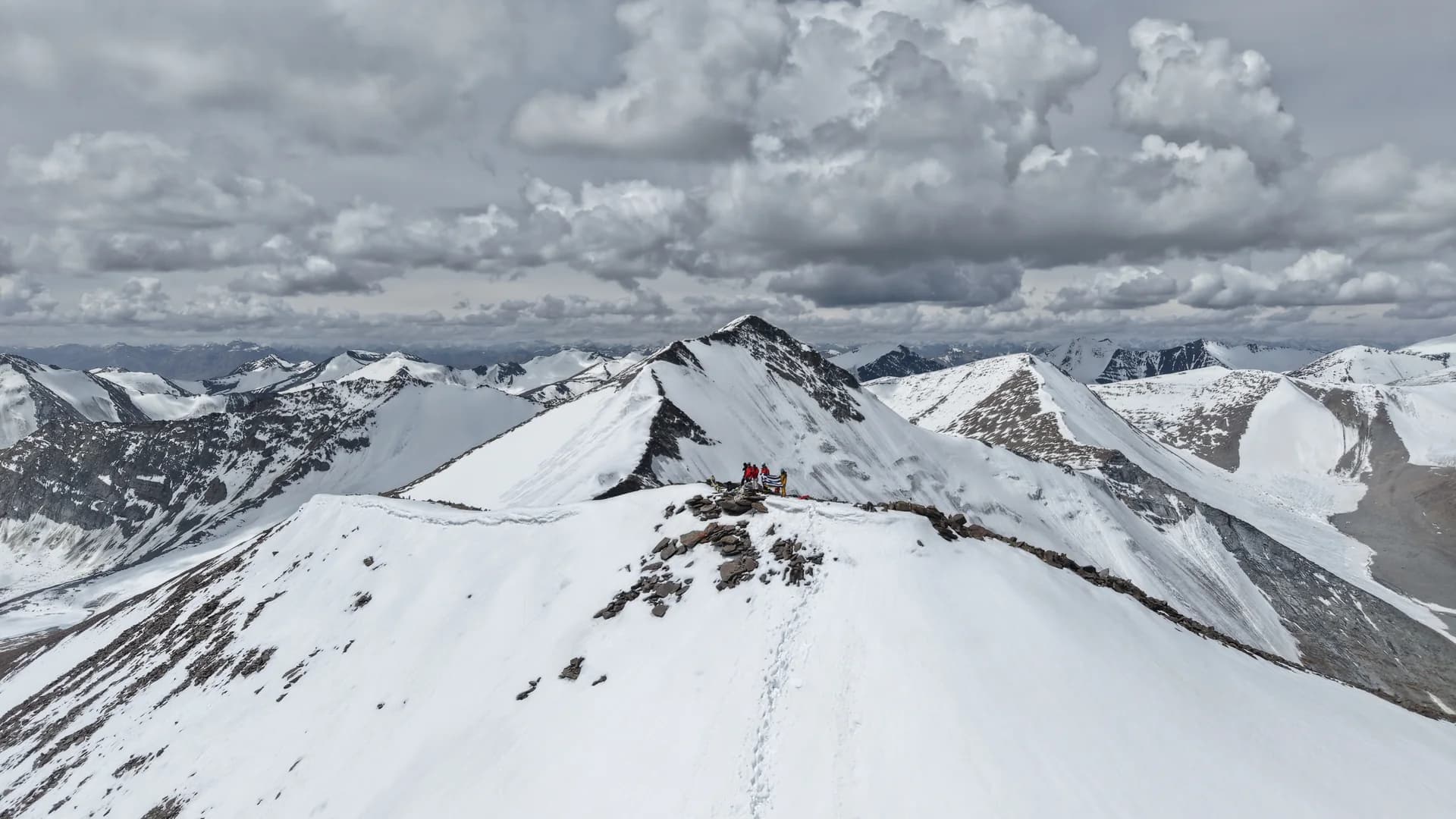
Winter Mountaineering Guide
Ladakh in winter. A mountaineering guide.
Prepare for a serious winter climb in Ladakh: experience, acclimatization, clothing, equipment and weather decisions, with Kang Yatse II, Kiager Ri and UT Kangri to compare.
Winter Climbing in Ladakh
Ladakh is one of the most spectacular high-altitude regions of the Indian Himalayas. Known for its remote valleys, dramatic mountains, high passes and technical climbing objectives, Ladakh becomes an entirely different world during winter.
When winter arrives, temperatures can fall well below freezing, trails can become covered with snow, water sources can freeze, daylight becomes shorter and strong winds can make high-altitude climbing significantly more demanding.
For experienced mountaineers, these conditions are exactly what make winter mountaineering in Ladakh and winter expeditions in the Indian Himalayas so unique.
A winter expedition to a 6000m-class Himalayan peak is not simply a summer climb in colder weather. Snow conditions, route finding, acclimatization, equipment, weather windows, technical climbing and summit strategy all become critical.
At White Expedition, we specialise in high-altitude mountaineering expeditions in the Indian Himalayas, including technical and winter objectives in Ladakh for experienced mountaineers.
What Is Winter Mountaineering In Ladakh?
Winter mountaineering involves climbing high-altitude mountains during the harshest part of the Himalayan winter.
Unlike normal trekking and climbing seasons, winter expeditions can involve:
- Deep snow
- Hard-packed snow and ice
- Extreme cold
- Strong winds
- Severe wind chill
- Frozen water sources
- Shorter daylight hours
- Snow-covered trails
- Difficult route finding
- Rapidly changing weather
- Increased technical difficulty
At elevations above 5,000m, these conditions can become particularly serious.
A route that may be relatively straightforward during the normal climbing season can become a completely different mountaineering objective during winter.
Why Choose Ladakh For Winter Climbing?
Ladakh offers a unique combination of high altitude, remote valleys, rugged mountain terrain and challenging Himalayan objectives.
The region is especially interesting for winter climbing because an expedition can involve everything from snow-covered approaches to technical high-altitude climbing.
During winter, the landscape changes dramatically.
Valleys become quieter, streams and water sources can freeze, established trails may disappear under snow and exposed ridges can experience strong winds.
For experienced climbers looking for a serious winter expedition in India, Ladakh provides an opportunity to experience the Himalayas under significantly more demanding conditions.
Winter Mountaineering Vs Summer Mountaineering
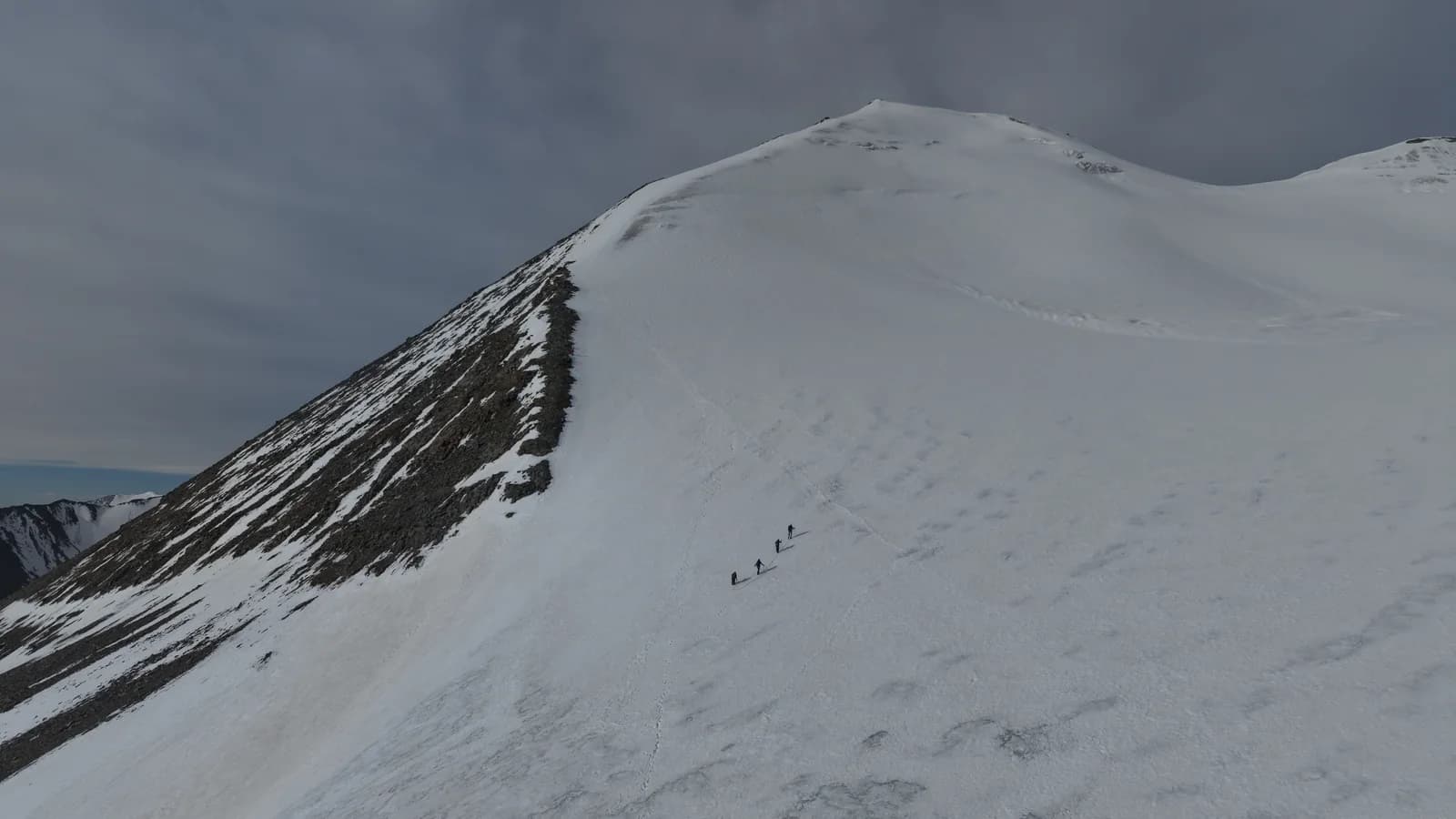
Winter climbing is not simply a colder version of summer mountaineering.
During the normal climbing season, trails are generally more visible and mountain logistics can be comparatively easier.
In winter:
- Snow can completely cover established trails.
- Frozen streams can become difficult crossings.
- Snow conditions can change the character of a route.
- Strong winds can stop summit attempts.
- Extreme cold increases the risk of cold-related injuries.
- Equipment becomes more important.
- Water management becomes difficult.
- Batteries can lose performance in extreme cold.
- Summit windows can become shorter.
- Route finding can become more difficult.
- Weather forecasting becomes even more important.
This is why winter mountaineering in India requires a different level of preparation from normal high-altitude trekking.
How Cold Is Winter In Ladakh?
Winter in Ladakh can be extremely cold, particularly at high altitude.
As elevation increases, temperatures can fall significantly below freezing while strong winds can create severe wind chill.
At high camps and exposed mountain terrain, climbers may experience:
- Sub-zero temperatures
- Strong summit winds
- Frozen water
- Snow and ice accumulation
- Extremely cold nights
- Rapid changes in weather
This is why ordinary trekking clothing is not sufficient for a serious winter expedition.
Expedition-grade insulation, a proper down suit or down layering system, warm gloves, appropriate mountaineering boots and windproof outer layers are essential.
How Difficult Is Winter Mountaineering In Ladakh?
High-altitude winter mountaineering is demanding.
The difficulty comes from the combination of altitude, cold, snow, wind, technical terrain, long summit days and unpredictable weather.
A climber attempting a 6000m winter expedition should be prepared for:
- Long days at altitude
- Walking through snow
- Hard snow and ice
- Crampon movement
- Ice axe use
- Fixed-rope sections
- Jumar or ascender use
- Harness movement
- Snow and ice travel
- Extreme cold
- Limited daylight
- Mental and physical fatigue
Winter high-altitude mountaineering is therefore not recommended for beginners.
Who Should Attempt A Winter 6000m Expedition?
Previous high-altitude mountaineering experience is strongly recommended.
Ideally, participants should have experience around 5000m or above and be comfortable using basic mountaineering equipment.
Important skills include:
- Crampon walking
- Ice axe techniques
- Harness use
- Jumar or ascender use
- Fixed-rope movement
- Snow travel
- Basic rope techniques
- High-altitude camp routines
Physical fitness is equally important.
A winter 6000m expedition requires strong cardiovascular endurance, leg strength, recovery ability and the ability to function in prolonged sub-zero conditions.
Acclimatization For Winter Mountaineering
Acclimatization is one of the most important parts of any high-altitude expedition.
In winter, acclimatization becomes even more important because cold, snow and difficult terrain can increase physical stress.
A typical winter expedition may follow a structure such as:
Leh → Acclimatization → Trek Approach → Base Camp → Technical Training → Summit Camp → Summit → Descent
The exact acclimatization strategy depends on the mountain, route, weather and condition of the expedition team.
At White Expedition, acclimatization and preparation are integrated into the expedition schedule before the team moves toward the highest camps.
Technical Training Before A Winter Summit
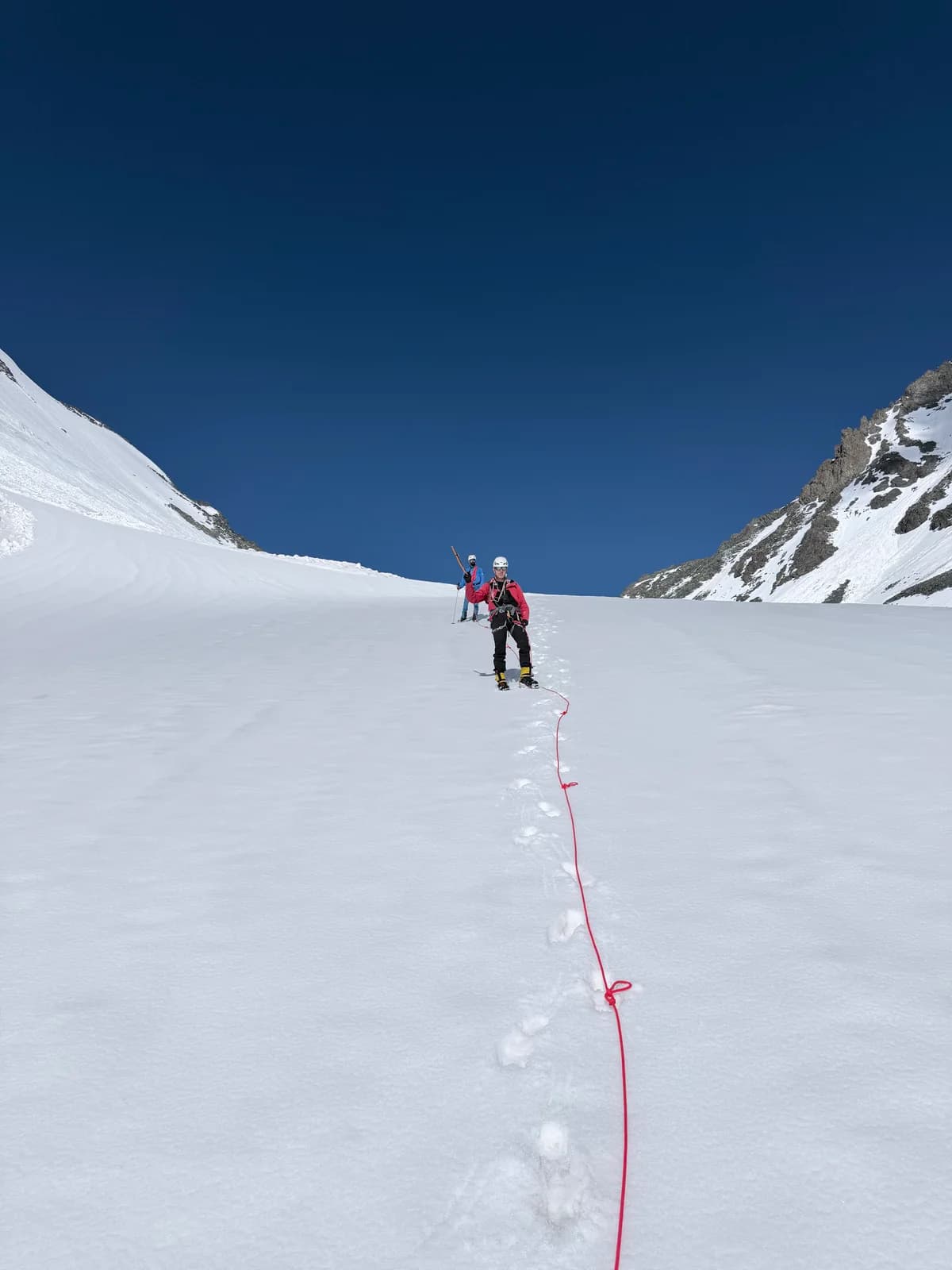
Technical training is an important part of a serious winter expedition.
Depending on the mountain and route, training can include:
- Crampon techniques
- Ice axe techniques
- Harness fitting
- Jumar or ascender use
- Locking carabiner use
- Fixed-rope movement
- Rope safety
- Snow and ice movement
- Winter climbing techniques
- Summit-day procedures
- Emergency procedures
Training allows climbers to become familiar with their equipment before entering more exposed and technical sections of the mountain. It supports expedition preparation and does not replace previous high-altitude experience.
Winter Mountaineering Gear For Ladakh
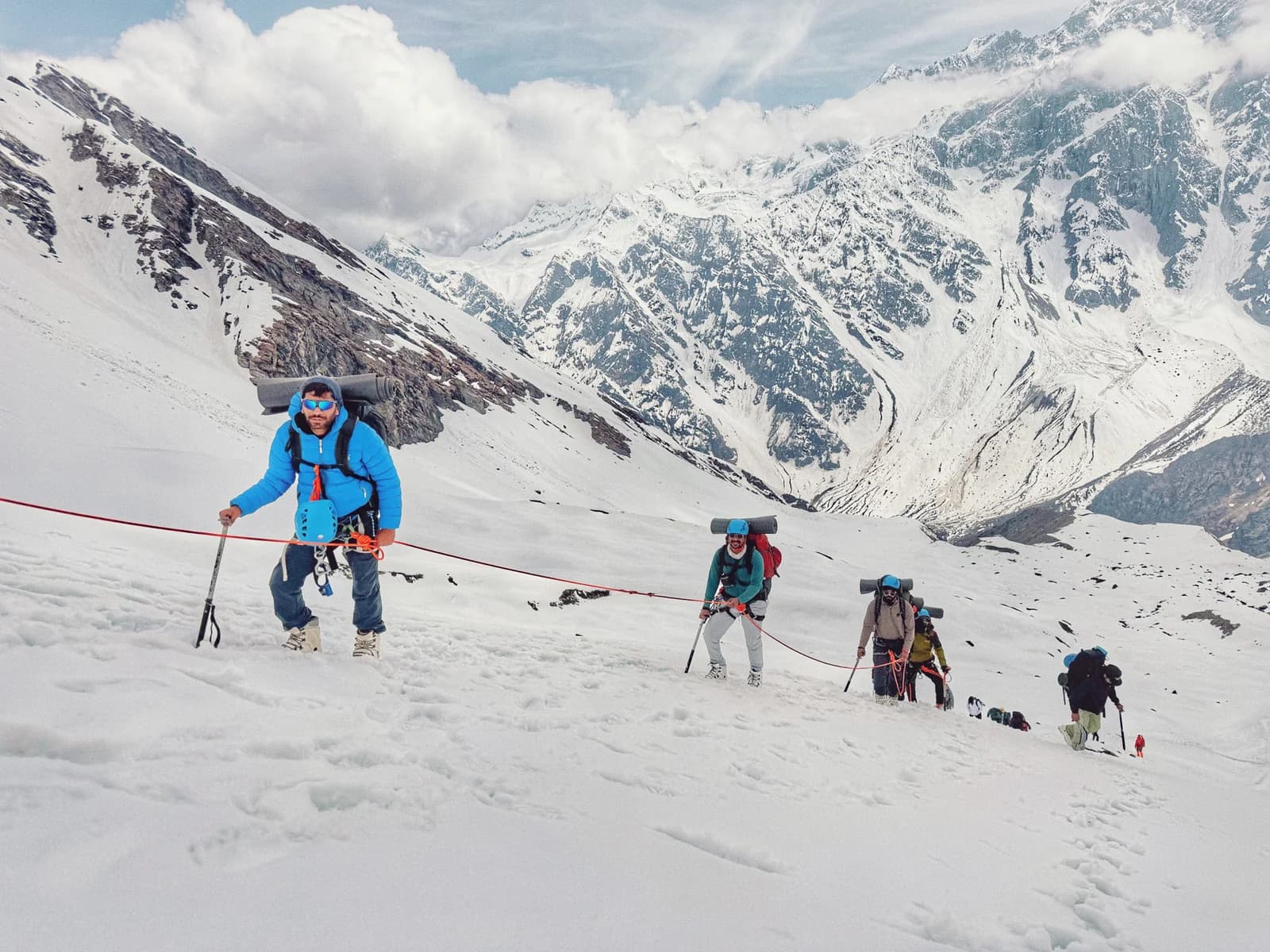
Winter climbing requires substantially more protection and insulation than a normal Himalayan trek.
Winter Clothing
- Expedition-grade down jacket
- Down pants
- Thermal base layers
- Fleece or mid-layer
- Waterproof and windproof shell
- Double-layer gloves
- Extra gloves
- Warm expedition socks
- Balaclava
- Wool cap
- Neck warmer
- High-altitude sunglasses
- High-altitude goggles
- Gaiters
Technical Climbing Equipment
Depending on the route:
- Mountaineering boots
- Crampons
- Ice axe
- Harness
- Helmet
- Jumar or ascender
- Locking carabiners
- Trekking poles
- Summit backpack
- Headlamp
Camp And Personal Equipment
- Insulated water flask
- Water bottles
- Headlamp with spare batteries
- Power bank
- Personal medicines
- Sunscreen
- Lip balm
- High-energy snacks
- Dry bags
- Waterproof duffel
- Hand warmers
- Thermos
A proper gear inspection before leaving Leh is extremely important because replacing missing or unsuitable equipment at high altitude may not be possible.
Winter Mountaineering Objectives In Ladakh
Ladakh has several high-altitude objectives that can appeal to experienced mountaineers looking for serious winter challenges.
White Expedition offers specialised winter objectives including:
Each mountain has its own terrain, altitude, approach, snow conditions and technical requirements.
The suitability of any objective depends on the specific winter conditions, route accessibility, weather and safety assessment.
Winter Kang Yatse II – 6,250m
Kang Yatse II (6,250m) is one of the major 6000m-class mountaineering objectives in Ladakh.
During winter, the mountain becomes considerably more demanding due to snow, extreme cold, strong winds and changing route conditions.
A Winter Kang Yatse II Expedition combines:
- High-altitude acclimatization
- Snow travel
- Technical mountaineering
- Base camp training
- Fixed-rope movement
- Summit-camp preparation
- High-altitude summit attempt
Winter conditions may include deep snow, hard-packed snow and ice, exposed terrain, strong winds and rapidly changing weather.
For experienced climbers looking for a serious Kang Yatse II winter climb, this is a demanding 6000m Himalayan objective.
For complete dates, itinerary, inclusions, equipment and booking information, visit our Winter Kang Yatse II Expedition page.
Winter Kiager Ri – 6,100m
Kiager Ri (6,100m) is another high-altitude mountaineering objective in Ladakh.
The mountain offers a different style of experience from the larger and more established Kang Yatse objectives.
During winter, Kiager Ri can become a serious high-altitude winter objective, with extreme cold, snow-covered approaches and demanding summit conditions.
A Winter Kiager Ri Expedition can involve:
- High-altitude acclimatization
- Snow travel
- Technical climbing
- Crampon movement
- Ice axe techniques
- Fixed-rope sections where required
- High-altitude camp life
- Winter summit strategy
For experienced mountaineers looking for a Winter Kiager Ri Expedition, the objective provides an opportunity to experience a 6000m-class mountain in a much harsher Himalayan environment.
Route and summit conditions can change significantly depending on snowfall, wind and the condition of the mountain.
Winter UT Kangri – 6,070m
UT Kangri (6,070m) is another 6000m-class mountain objective in Ladakh that can be considered by experienced high-altitude mountaineers.
Winter conditions can transform the character of UT Kangri, with snow, ice, strong winds and freezing temperatures creating additional challenges.
A Winter UT Kangri Expedition requires:
- Strong physical fitness
- High-altitude experience
- Winter clothing and insulation
- Crampon skills
- Ice axe skills
- Proper acclimatization
- Strong cold tolerance
- Ability to operate safely in snow and ice
For climbers interested in a Winter UT Kangri Expedition, the mountain can offer a serious high-altitude winter climbing experience in Ladakh.
As with every winter mountain, the actual route and summit strategy depend on current conditions.
Which Winter 6000m Expedition Should You Choose?
The right mountain depends on your previous experience, technical ability, fitness and the conditions during the expedition period.
Winter Kang Yatse II
Best suited for experienced mountaineers looking for a serious and demanding 6000m winter objective.
Winter Kiager Ri
A high-altitude winter objective for experienced climbers looking for snow, ice and challenging Himalayan terrain.
Winter UT Kangri
A 6000m-class winter objective requiring strong preparation, acclimatization and the ability to operate in snow and extreme cold.
The final suitability of any mountain should always be assessed by the expedition team based on current route, snow and weather conditions.
Winter Approaches And Route Conditions
Winter approaches in Ladakh can be significantly different from summer approaches.
Snow may cover established trails, frozen streams may become difficult to cross and visibility can change rapidly.
Depending on the mountain, an expedition may include:
Leh → Acclimatization → Valley Approach → Base Camp → Technical Training → Summit Camp → Summit → Descent
For example, the Winter Kang Yatse II approach can involve moving from Leh toward the Markha Valley and then toward Markha, Hankar and the Kang Yatse II Base Camp.
The exact route and camps may change depending on winter conditions, access, snow accumulation and safety assessments.
Weather And Summit Windows
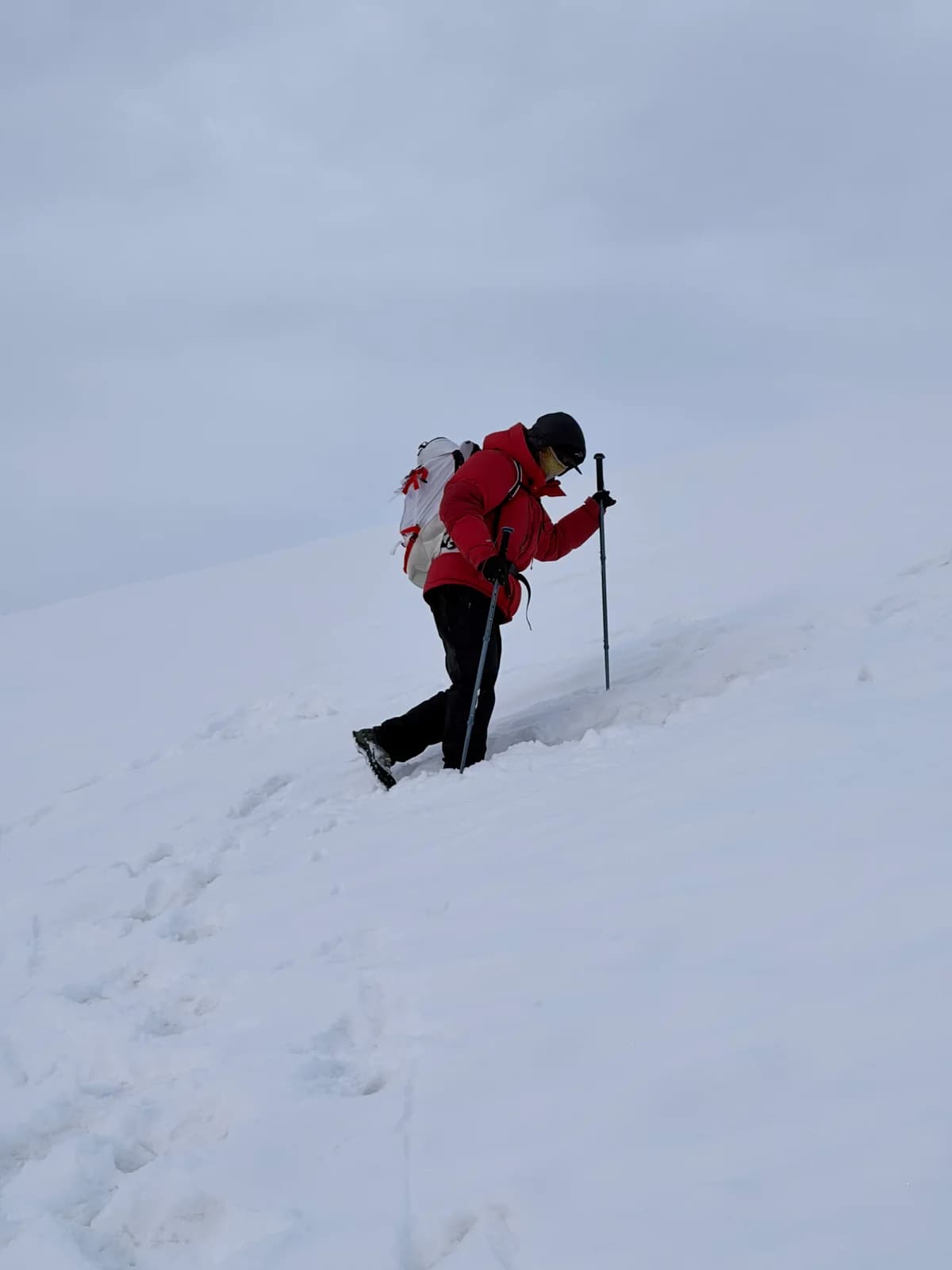
Weather is one of the biggest deciding factors in winter Himalayan mountaineering.
Even a strong team with excellent preparation cannot control mountain weather.
A summit attempt may be delayed or cancelled because of:
- Strong winds
- Heavy snowfall
- Poor visibility
- Unsafe snow conditions
- Extreme cold
- Rapid weather deterioration
- Snow-related hazards
- Unsafe route conditions
The Expedition Leader makes the final decision based on the safety of the team.
In winter mountaineering, reaching the summit is always secondary to returning safely.
What Happens If The Summit Is Not Safe?
A responsible expedition should never force a summit attempt simply because a date has been scheduled.
If the planned mountain becomes unsafe, the expedition may:
- Wait for a better weather window
- Delay the summit push
- Return to a lower camp
- Modify the route
- Shorten the expedition
- Cancel the summit attempt
Where conditions allow, an alternative 6000m-class objective may be considered.
However, an alternative summit is never guaranteed.
Mountain safety always comes first.
Food And Water During Winter Expeditions
Nutrition and hydration become extremely important during winter climbing.
The body uses significant energy to maintain warmth while also dealing with altitude and physical exertion.
Mountain meals generally focus on:
- High-energy food
- Carbohydrates
- Warm meals
- Hot drinks
- Soups
- Hydration
- Easy-to-digest food
Water management can become more difficult because natural water sources may freeze.
At higher camps, snow may need to be melted for drinking water, requiring additional fuel and careful planning.
Why 1:1 Guide Support Matters
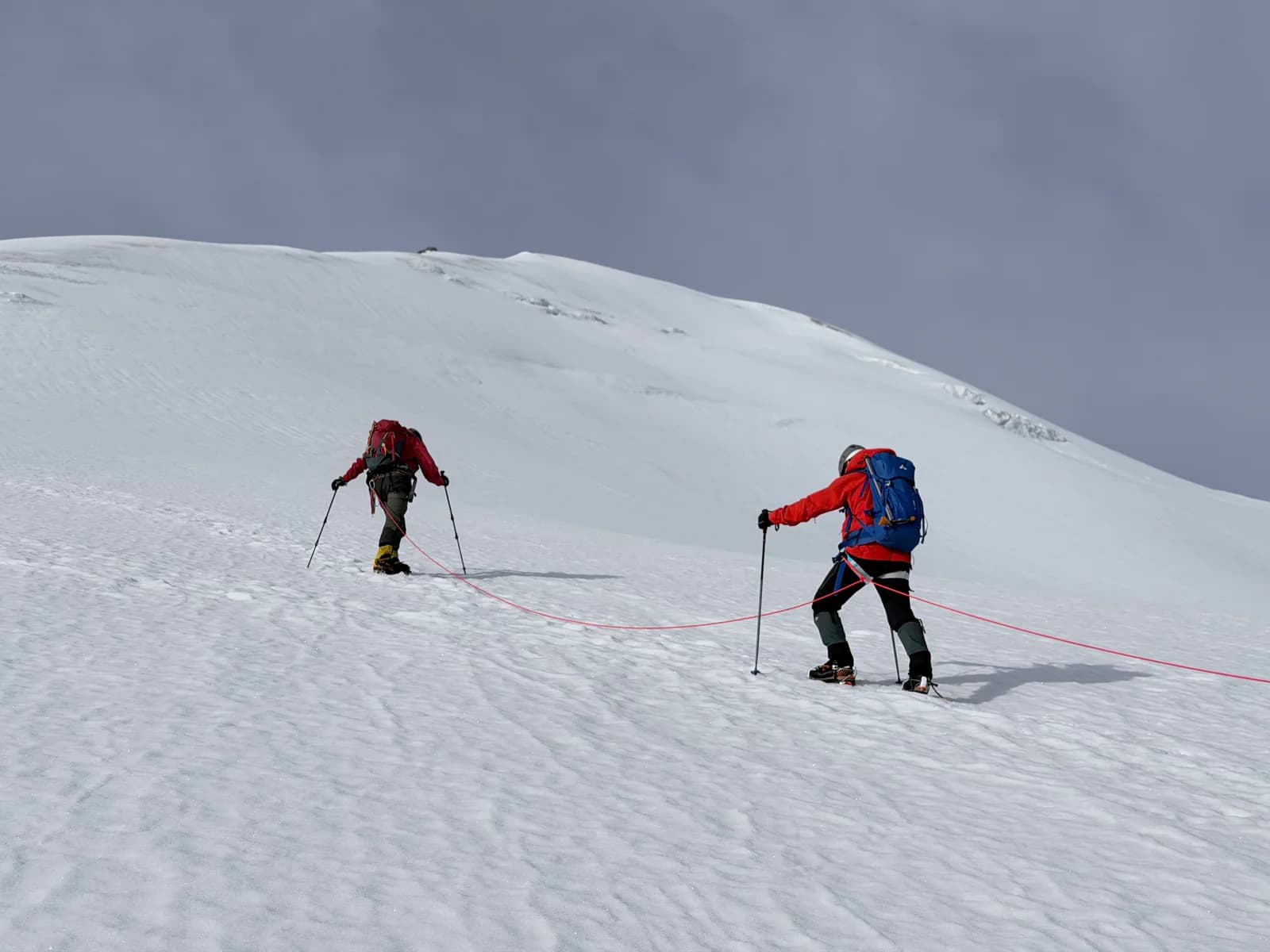
Winter mountaineering involves multiple risks and variables.
A close guide-to-client ratio allows closer monitoring of:
- Physical condition
- Acclimatization
- Equipment
- Climbing technique
- Summit readiness
- Weather decisions
- Movement on technical terrain
At White Expedition, our winter mountaineering approach is designed around close guide support, technical preparation and complete expedition logistics.
Safety In Winter Mountaineering
Safety begins long before the summit day.
A responsible winter expedition should include:
- Experienced mountain guides
- Technical training
- Weather monitoring
- Medical support
- Emergency planning
- Oxygen backup
- Proper climbing equipment
- Appropriate acclimatization
- Route assessment
- Flexible summit strategy
Participants should also have insurance specifically covering high-altitude mountaineering, emergency medical treatment, search and rescue and evacuation.
How To Prepare For A Winter Expedition In Ladakh
Preparation should begin well before arriving in Leh.
Physical Preparation
Focus on:
- Long-distance hiking
- Uphill endurance
- Stair climbing
- Strength training
- Leg endurance
- Core strength
- Cardiovascular fitness
Technical Preparation
Participants should understand:
- Crampon walking
- Ice axe use
- Harness use
- Fixed ropes
- Jumar movement
- Basic rope safety
- Snow travel
Mental Preparation
Winter mountaineering requires patience.
You may spend hours in extreme cold waiting for a weather window or for route conditions to improve.
The ability to remain calm, follow instructions and make conservative decisions is extremely important.
Winter Mountaineering In India
Winter mountaineering in India offers experienced climbers the opportunity to explore high-altitude Himalayan objectives under challenging snow, cold and wind conditions.
From Ladakh to other regions of the Indian Himalayas, winter climbing requires specialised equipment, technical skills, acclimatization and careful weather assessment.
Ladakh is particularly suited to serious winter mountaineering because of its high-altitude terrain, remote mountain valleys and challenging 6000m-class objectives.
For experienced mountaineers, a winter expedition in India can provide a very different perspective of the Himalayas compared with the conventional climbing season.
How To Reach Leh For A Winter Mountaineering Expedition
Leh is the primary starting point for many Ladakh mountaineering expeditions.
During winter, air travel is generally the practical option for reaching Leh, while road access can be affected by winter conditions.
Flights may also be affected by weather, so participants should maintain flexibility in their travel plans.
After reaching Leh, proper acclimatization is essential before moving toward higher elevations.
Why Choose White Expedition?
White Expedition specialises in high-altitude mountaineering expeditions across the Indian Himalayas.
Our winter expedition approach focuses on:
- Experienced and certified mountain guides
- Close guide-to-client support
- Technical training
- Winter-specific preparation
- High-altitude logistics
- Weather monitoring
- Route and summit planning
- Emergency planning
- Medical oxygen backup
- Base camp support
- Technical climbing equipment
- Safety-first decision making
The goal is not simply to reach a summit.
The goal is to prepare properly, climb responsibly and return safely.
Is Winter Mountaineering In Ladakh For You?
Winter mountaineering is not the same as a winter trek.
If you are looking for an easy snow adventure, a 6000m winter expedition is probably not the right objective.
But if you are an experienced mountaineer looking for:
- A serious Himalayan challenge
- A 6000m winter objective
- Extreme winter conditions
- Snow and ice climbing
- High-altitude expedition experience
- Technical mountaineering
- A challenging Ladakh adventure
then winter mountaineering in Ladakh can be an exceptional experience.
The mountains are harder, the weather is less predictable and the margin for error is smaller.
That is exactly why preparation matters.
Explore Winter Expeditions In Ladakh
If you are planning a winter mountaineering expedition in Ladakh, explore the winter expeditions catalogue and confirm suitability, operating status and the current programme with the team before arranging travel.
Winter Kang Yatse II – 6,250m
A demanding winter 6000m objective combining high-altitude trekking, technical climbing, snow and ice travel and summit-camp operations.
Explore our Winter Kang Yatse II Expedition for complete itinerary, dates, inclusions, equipment and booking information.
Winter Kiager Ri – 6,100m
A high-altitude winter objective for experienced climbers looking for challenging snow, ice and Himalayan mountain terrain.
Explore our Winter Kiager Ri Expedition for expedition details and availability.
Winter UT Kangri – 6,070m
A serious 6000m-class winter objective requiring strong preparation, acclimatization, technical skills and the ability to operate in extreme winter conditions.
Explore our Winter UT Kangri Expedition for complete expedition information.
Frequently Asked Questions
Is winter mountaineering possible in Ladakh?
Yes. Winter mountaineering is possible, but it requires specialised preparation, suitable equipment, experienced guides and careful assessment of weather and mountain conditions.
Is Winter Kang Yatse II suitable for beginners?
No. Winter Kang Yatse II is a demanding high-altitude mountaineering objective. Previous high-altitude and basic mountaineering experience is strongly recommended.
Is Winter Kiager Ri suitable for beginners?
Winter Kiager Ri is a serious 6000m-class objective. Participants should have previous high-altitude and mountaineering experience and be comfortable with winter climbing equipment.
Is Winter UT Kangri suitable for beginners?
Winter UT Kangri is not recommended for beginners. Experience at high altitude, strong fitness and familiarity with mountaineering equipment are important.
What is the best time for winter mountaineering in Ladakh?
The most suitable period depends on the mountain, route, snow conditions and weather window. Winter expedition dates should always be planned around current mountain conditions rather than relying only on a fixed calendar.
How cold is a 6000m winter expedition?
Conditions can be extremely cold and temperatures can fall well below freezing, particularly at higher camps. Strong winds can make conditions feel significantly colder.
Do I need previous mountaineering experience?
Yes. Previous high-altitude experience is strongly recommended. Experience around 5000m or above and familiarity with crampons, ice axe and fixed ropes is preferred.
How should I prepare for a 6000m winter expedition in Ladakh?
Preparation should include cardiovascular endurance, uphill hiking, strength training and long-distance trekking. Climbers should also be familiar with crampons, ice axe, harness and fixed-rope techniques. Proper acclimatization, expedition-grade winter clothing and mental preparation for prolonged cold are equally important.
What equipment is required?
Participants need expedition-grade winter clothing and personal equipment. Technical climbing equipment such as crampons, ice axe, harness, helmet, jumar and carabiners may be provided depending on the expedition package.
Is oxygen available?
Medical oxygen backup can be carried as part of the expedition safety system, depending on the expedition plan and mountain conditions.
Can the summit be guaranteed?
No. Mountain weather and conditions can change rapidly. The summit attempt depends on weather, snow conditions, route safety, team condition and the decision of the Expedition Leader.
What happens if heavy snowfall makes the mountain unsafe?
The expedition may wait, modify the schedule, return to a lower camp, change the route or cancel the summit attempt. Where appropriate, an alternative 6000m-class objective may be considered.
Do I need mountaineering insurance?
Yes. Participants should have insurance that specifically covers high-altitude mountaineering, emergency medical treatment, search and rescue and evacuation.
Is winter mountaineering harder than summer climbing?
Yes. Winter conditions can add significant challenges because of extreme cold, snow, wind, shorter daylight and changing route conditions.
Final Thoughts: Winter Mountaineering In Ladakh
Winter changes the Himalayas.
A familiar mountain can become a completely different mountaineering objective when covered in snow and exposed to winter winds.
For experienced mountaineers, this creates an opportunity to experience the Indian Himalayas under some of their most demanding conditions.
From Winter Kang Yatse II to Winter Kiager Ri and Winter UT Kangri, Ladakh offers serious high-altitude objectives for climbers looking beyond conventional trekking.
Winter mountaineering requires preparation, discipline, technical skills, the right equipment and respect for the mountain.
If you are planning a serious 6000m winter expedition in Ladakh, explore White Expedition’s winter mountaineering programs and choose an objective based on your experience, technical ability, fitness and current mountain conditions.
White Expedition
Winter Mountaineering | 6000m+ Himalayan Expeditions | Ladakh, India
“Reach the summit if conditions allow. Return safely regardless of the outcome.”