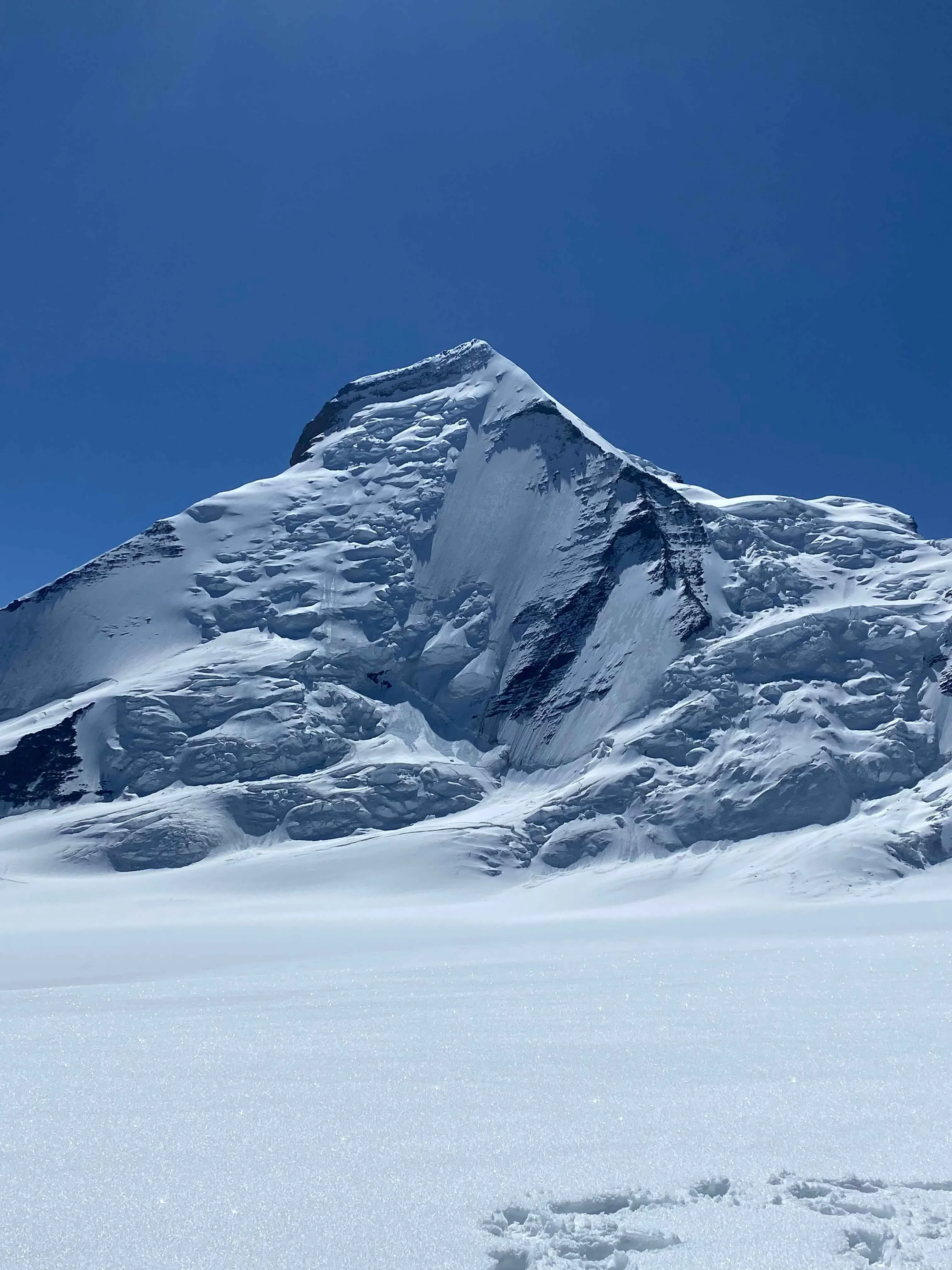
Peak Comparison
Mount Nun or Kun? Compare 7000m climbs.
Detailed comparison of Mt Nun (7,135m) and Kun Peak (7,077m) in Ladakh including difficulty, route style, expedition duration, and which peak climbers should choose.
Mt Nun vs Kun Peak – Which 7000m Himalayan Peak is Better to Climb?
The Indian Himalaya is home to some of the most incredible high‑altitude mountains in the world. Among them, the famous Nun–Kun massif in Ladakh attracts climbers from across the globe. The two main peaks in this massif are Mt Nun and Kun Peak.
Both peaks rise above 7000 meters, offering serious mountaineering challenges and breathtaking Himalayan scenery. Climbers planning a high‑altitude expedition often ask one common question:
Which peak is better to climb – Mt Nun or Kun Peak?
Although these two mountains stand next to each other, their difficulty level, climbing experience, and expedition challenges are quite different.
In this guide, we will compare Mt Nun vs Kun Peak in detail to help climbers choose the best objective for their Himalayan adventure.
Overview of Mt Nun and Kun Peak
Both peaks are located in the Zanskar Range of the Indian Himalaya in Ladakh, near the beautiful Suru Valley.
They form the famous Nun‑Kun massif, one of the most dramatic mountain groups in India.
Mt Nun
- Height: 7,135 meters
- Highest peak in the Zanskar Range
- First climbed in 1953
- Large glacier systems
- Popular 7000m expedition peak
Kun Peak
- Height: 7,077 meters
- Slightly lower than Mt Nun
- Considered more technical
- Requires stronger climbing skills
Although their heights are similar, the climbing style and difficulty are different.
Location and Access
Both mountains are approached through Kargil, a major town located between Srinagar and Leh.
From Kargil, climbers travel through the scenic Suru Valley, one of the most beautiful valleys in Ladakh.
The expedition usually begins from a small village near the valley, followed by a trek to the glacier where base camp is established.
Because the peaks are located in the same massif, the approach route and base camp area are very similar.
Mt Nun vs Kun Peak – Height Comparison
The first obvious difference between the two mountains is their height.
- Mt Nun – 7,135 meters
- Kun Peak – 7,077 meters
Mt Nun is around 58 meters higher than Kun Peak and is the highest peak in the Zanskar range.
Although the difference in height is small, Mt Nun is considered the main summit of the Nun‑Kun massif, which is why many climbers prioritize it.
Difficulty Comparison
When comparing Mt Nun vs Kun Peak, the most important factor is difficulty.
Mt Nun Difficulty
Mt Nun is considered a moderate to challenging expedition peak.
The main challenges include:
- High altitude above 7000 meters
- Glacier travel
- Crevasses
- Long summit day
However, the technical climbing difficulty is moderate, which is why many experienced climbers attempt Mt Nun as their first 7000m mountain.
Kun Peak Difficulty
Kun Peak is generally considered more technical than Mt Nun.
Climbers may face:
- Steeper snow slopes
- Technical ridge sections
- More exposed climbing routes
Because of this, Kun Peak usually requires stronger mountaineering experience.
Many climbers attempt Kun Peak after gaining significant experience on technical mountains.
Route and Climbing Style
The climbing routes for the two mountains are also different.
Mt Nun Route
The normal route on Mt Nun involves:
- Glacier travel
- Establishing multiple high camps
- Gradual ascent to the summit ridge
The route is long but relatively straightforward compared to many technical Himalayan peaks.
This makes it a classic expedition‑style climb.
Kun Peak Route
The route on Kun Peak often involves:
- More technical climbing sections
- Steeper terrain
- Exposed ridges
Because of this, the climb requires greater confidence with ice axe and crampon techniques.
Kun Peak is therefore considered a more technical alpine challenge.
Expedition Duration
Both mountains require a full Himalayan expedition.
Typical expedition duration:
- Mt Nun Expedition: 20–25 days
- Kun Peak Expedition: 20–25 days
The time required includes:
- Trek to base camp
- Acclimatization rotations
- Establishing high camps
- Summit attempt
Weather conditions in the Zanskar Range can be unpredictable, so extra days are usually included for safety.
Scenery and Experience
Both mountains offer spectacular Himalayan scenery.
During the expedition climbers experience:
- Huge glaciers
- Snow‑covered peaks
- Remote valleys of Ladakh
- Incredible sunrise views across the Himalaya
From the summit of either mountain, climbers can see vast ranges of peaks stretching across Ladakh.
The experience of climbing in this remote region is truly unforgettable.
Best Season to Climb
The best time to climb both Mt Nun and Kun Peak is:
July to September
During this period:
- Weather is relatively stable
- Snow conditions are suitable for climbing
- Temperatures are manageable
August is often considered the best month for summit attempts.
Which Peak Should You Choose?
The choice between Mt Nun and Kun Peak depends on your experience and mountaineering goals.
Choose Mt Nun if:
- You want to climb your first 7000m peak
- You have experience on 6000m mountains
- You prefer a less technical but high‑altitude expedition
Many climbers who have summited peaks like Friendship Peak, Deo Tibba, or Kang Yatse choose Mt Nun as their next challenge.
Choose Kun Peak if:
- You have strong technical climbing experience
- You are comfortable with steep snow and ice routes
- You want a more technical 7000m climb
Kun Peak is often chosen by climbers looking for a more demanding alpine mountaineering challenge.
Why Climbers Attempt the Nun‑Kun Massif
The Nun‑Kun massif is one of the most iconic mountaineering regions in the Indian Himalaya.
Climbing here offers:
- A true Himalayan expedition experience
- Large glacier systems
- High‑altitude technical climbing
- Remote wilderness landscapes
For serious climbers, the massif represents an important step toward higher Himalayan objectives.
Final Thoughts
Both Mt Nun and Kun Peak are incredible mountains offering unforgettable Himalayan adventures.
While Mt Nun is slightly higher and more popular as a first 7000m peak, Kun Peak offers a more technical and demanding climbing experience.
The choice ultimately depends on your experience, skills, and personal goals as a mountaineer.
Whichever mountain you choose, climbing in the Nun‑Kun massif of Ladakh is a once‑in‑a‑lifetime experience.
With proper preparation, strong fitness, and the support of an experienced expedition team, reaching the summit of a 7000m Himalayan peak can become one of the most rewarding achievements in mountaineering.