Gulmarg Snow Sports Guide
Ski or snowboard? Start in Gulmarg.
Choose between skiing and snowboarding, understand what the first lessons may cover, and prepare your clothing and questions for a Gulmarg winter course.
Choosing Your First Snow Sport in Gulmarg
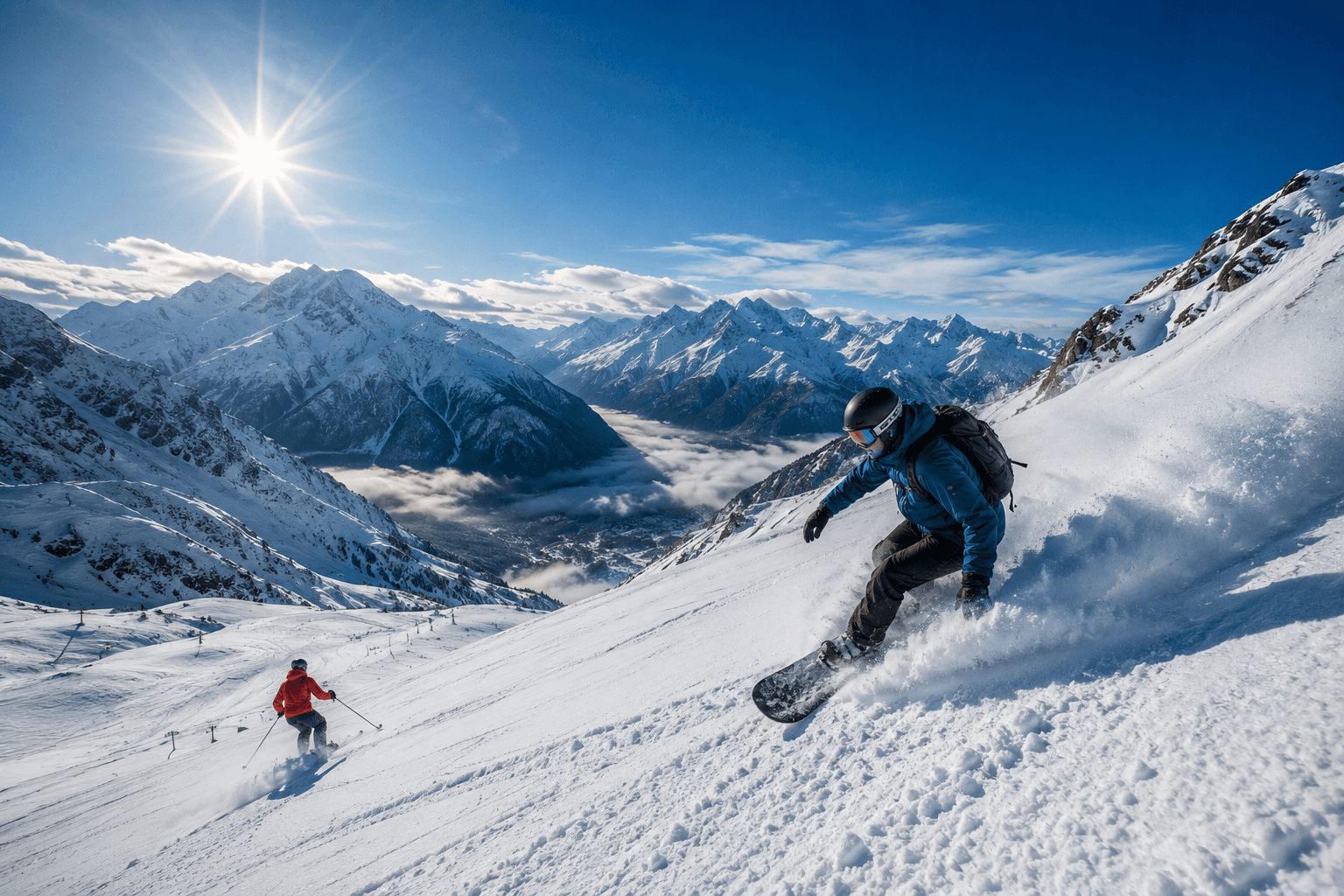
Gulmarg brings skiing and snowboarding into a Himalayan mountain setting. That can make a first lesson exciting, but the useful goal is simple: learn to move, control speed and stop on terrain suited to your ability. A course should build those fundamentals before asking you to ride faster or higher.
White Expedition's Gulmarg Ski & Snowboard Course is presented for beginners and riders improving existing skills. This guide helps you decide which activity to try and what to ask before joining. For a comparison with winter climbing and ice training elsewhere in India, see the wider winter programme guide.
Skiing or Snowboarding: Which Should You Start With?
Skiing uses two separate skis. Early lessons usually focus on stance, balance, straight gliding, slowing, stopping and then turning. Some beginners find the forward-facing position more familiar. Good control still takes repeated practice; an easy first glide is not the same as being ready for steeper ground.
Snowboarding puts both feet on one board. New riders work on sideways balance, heel-edge and toe-edge control, stopping and then connecting turns. Falling while learning to balance is common. Progress depends on practice, instruction and suitable terrain rather than a fixed number of days.
Choose the activity that interests you enough to practise. If you have previous experience in one, tell the course team what you can already do. If you are undecided or hope to try both on the same trip, ask how instruction time and equipment would be arranged; do not assume one course schedule covers both.
What a Beginner Lesson Builds Toward
The learning sequence should respond to each participant, the snow and the day's visibility. A typical progression is:
- Equipment and stance. Understand the boots, bindings, skis or board, and how to stand comfortably.
- Balance and movement. Practise basic gliding in a controlled area before moving to longer slopes.
- Speed control and stopping. Learn a reliable way to slow and stop with your chosen equipment.
- Turning. Develop a repeatable turn, then link turns with enough control to manage suitable terrain.
- Slope awareness. Learn where to stop, how to share a slope and how to follow instructor directions and local rules.
An improving skier or snowboarder may spend more time on linked turns, edge control and balance. The instructor should decide when a longer or more demanding run fits the rider and the conditions. Mountain weather can change a session plan.
What to Wear and Check Before Travel
Comfort on snow depends on clothing that manages warmth and moisture. Use a base layer, an insulating layer and an outer layer that protects against wind and wet snow. Add gloves, suitable socks, head and face protection, goggles or sunglasses, and sun protection. Avoid relying on cotton as the main base layer for a long cold-weather session because it can hold moisture.
The activity also needs correctly fitted skis or a snowboard, boots and a helmet. Before travel, ask the course team which items are supplied, which you must bring, and whether rental or fitting is arranged. Check sizes in advance if your footwear or clothing requirements are unusual. The exact package, lift or transport arrangements should come from the current course details, not a generic packing list.
Keep Control Ahead of Speed
Gulmarg's snow, weather and visibility can vary during a course. Start on terrain matched to your current control, follow the instructor's guidance, and tell them when you are tired, cold or uncertain. Watch for other slope users, stop in a visible safe place, and respect local slope and lift rules.
Skiing and snowboarding are winter sports skills, not substitutes for mountaineering training. They can improve familiarity with snow and cold-weather routines, but they do not by themselves qualify someone for a winter ascent or technical expedition.
Questions Worth Asking the Course Team
- Should I join a beginner or improving-rider group based on what I can already do?
- Does my booking cover skiing, snowboarding or a planned combination of both?
- What equipment, clothing, lift access, meals, accommodation and local transport are included in the current package?
- How will instruction change if snow, weather or visibility limits the planned terrain?
- What is the current course duration, meeting point, price and availability?
The answers should come from the current operating programme. The Gulmarg course page is the starting point, followed by a direct conversation about your goals and any equipment or mobility needs.
Frequently Asked Questions
Can a complete beginner join a Gulmarg ski or snowboard course?
The current White Expedition course is presented for beginners as well as improving riders. A first-timer should start with instruction and suitable terrain. Confirm the current group and participation requirements before booking.
Is skiing easier than snowboarding?
Some learners feel comfortable sooner on skis; others prefer the snowboard movement pattern. Both require balance, speed control, stopping and practice. Choose based on your interests and discuss any previous experience with the instructor.
How long does it take to learn?
There is no guaranteed number of days. Early control may develop quickly, while reliable turns and confidence take continued practice. The course team can recommend a suitable programme for your starting level and goals.
Do I need to own equipment?
Equipment arrangements depend on the selected course and current package. Ask what is supplied, what is rented and what personal clothing you need before travelling.
When should I go to Gulmarg for snow training?
Winter is the primary season, but usable conditions vary with snowfall, weather and access. Check the current course schedule and conditions close to travel.