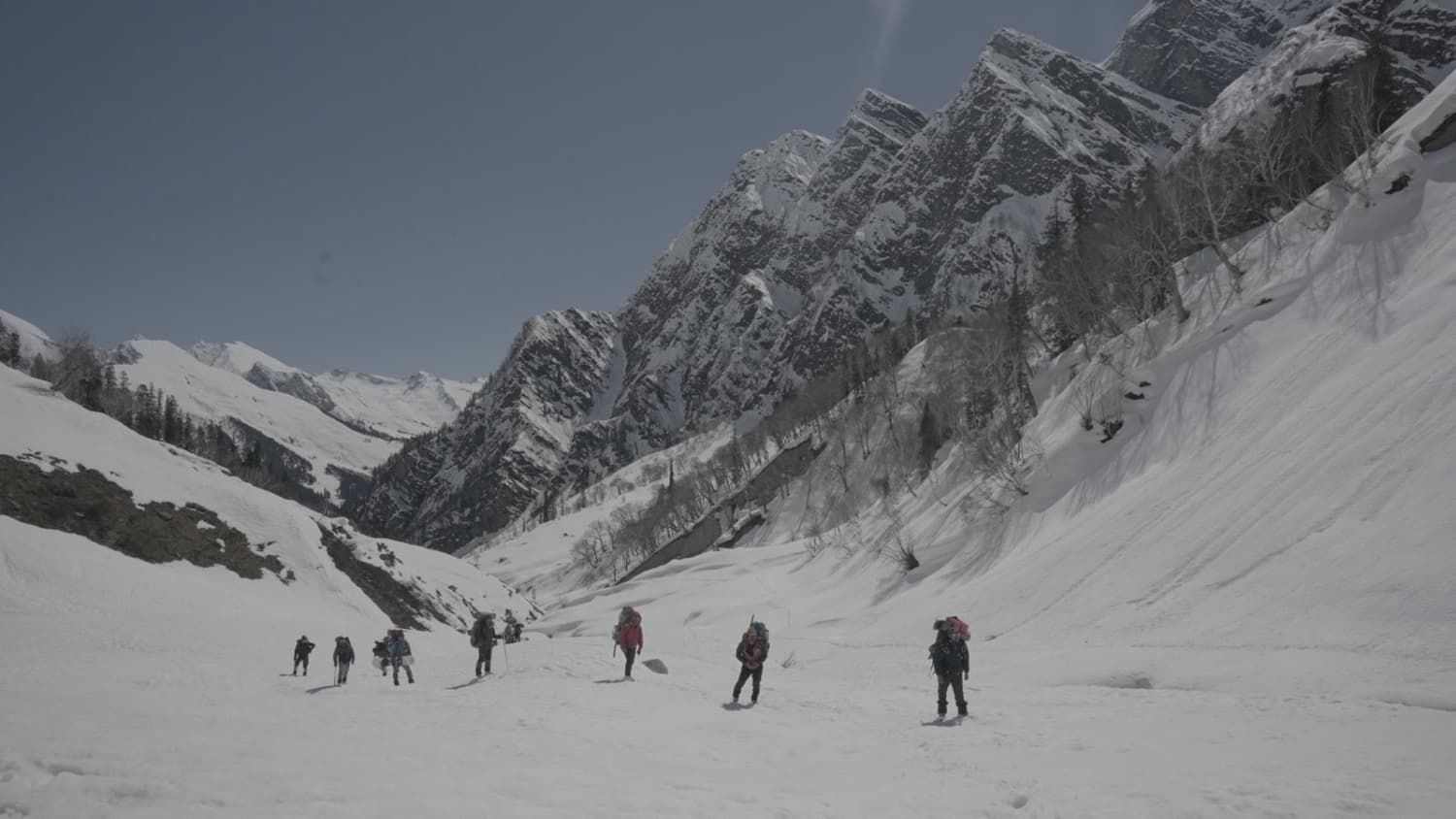
Field Guide
Unclimbed peaks. Himalayan exploration.
A deep look into why the Indian Himalayas still offer authentic exploratory mountaineering, first ascents, and unclimbed peak potential.
Unclimbed Peaks in the Indian Himalayas: Why Exploration Still Exists Here
In an age where almost every major mountain has been mapped, guided, fixed, and photographed, true exploration feels like a relic of the past.
GPS tracks exist for nearly every route. Summit photos are uploaded before climbers return to base camp. Success is often measured by speed, not discovery.
And yet far from the spotlight, real exploration still exists. It exists in the vast, complex, and largely overlooked ranges of the Indian Himalayas.
For serious mountaineers seeking uncertainty, originality, and meaning beyond summits, this region remains one of the last true frontiers on Earth.
What Does "Unclimbed" Really Mean Today?
When we talk about unclimbed peaks, we are not talking about fantasy.
In the Indian Himalayas, unclimbed can mean:
- Peaks that have never been attempted
- Peaks that were approached but never summited
- Peaks without recorded routes
- Peaks without official names
In many valleys, even local knowledge is limited because the terrain is:
- Extremely remote
- Seasonally inaccessible
- Logistically complex
Unlike commercial regions, documentation here is often incomplete or nonexistent. This is not accidental. It is structural.
Why the Indian Himalayas Remain Underexplored
The Indian Himalayas are not one continuous playground. They are a labyrinth of parallel ranges, isolated valleys, and glaciated basins spread across thousands of kilometers.
Several factors have preserved their exploratory nature.
1. Strict Permit and Access Systems
Unlike Nepal, where many peaks are open and commercially regulated, India maintains:
- Restricted access zones
- Permit requirements for specific valleys
- Army-controlled border regions
While this limits mass tourism, it also prevents overcrowding and protects unexplored terrain. For explorers, this means fewer competitors and more genuine discovery.
2. Long Approaches and Logistical Complexity
Many unclimbed peaks require:
- Multiple days of trekking just to reach base camp
- Load carries through roadless terrain
- Self-sufficient expedition planning
There are no teahouses. No helicopter supply runs. No infrastructure waiting at altitude.
This naturally filters out casual climbers.
3. Technical Difficulty Over Commercial Appeal
Many Indian Himalayan peaks are:
- Steep
- Broken
- Technically complex
- Prone to avalanche and rockfall
They are not "walk-up" 6,000-meter objectives.
Exploration here demands:
- Alpine skills
- Route-finding ability
- Comfort with uncertainty
That is why these mountains remain unclimbed, not because they are easy, but because they are serious.
Regions Where Exploration Is Still Alive
Several Himalayan regions continue to offer genuine exploratory potential.
Ladakh
High-altitude desert, vast glaciers, and isolated peaks dominate Ladakh. Many side valleys see no expeditions for years.
Here, climbers encounter:
- Unknown glacier systems
- Complex weather patterns
- Peaks with no recorded history
Zanskar
Zanskar is one of the most remote regions in the Himalayas. Deep gorges, frozen rivers, and towering walls make access difficult. Many peaks here remain untouched simply because reaching them is an expedition in itself.
Spiti Valley
Cold, arid, and brutally exposed, Spiti holds countless unnamed summits. The terrain is unforgiving, the weather erratic, and the isolation absolute, perfect conditions for true exploration.
Lahaul
Often overshadowed by more famous areas, Lahaul hides complex glacier networks and technical peaks that have seen little to no climbing activity.
First Ascents: More Than Just a Summit
A first ascent in the Indian Himalayas is rarely straightforward. It often involves:
- Uncertain access routes
- Ambiguous topography
- No existing beta
- No historical reference
Every decision from camp placement to route choice is original. There is no comparison point. No previous mistakes to learn from. No fixed idea of "the right way."
This is mountaineering in its purest form.
Why Exploration Matters in Modern Mountaineering
In a results-driven climbing culture, exploration restores balance. It shifts focus from:
- Speed to judgment
- Records to responsibility
- Recognition to experience
Exploratory climbs demand humility. They reward patience. They punish ego.
For many serious climbers, this is where mountaineering regains its meaning.
The Role of Ethical Exploration
Exploration without ethics is exploitation. In the Indian Himalayas, ethical exploration means:
- Respecting sacred landscapes
- Minimizing environmental impact
- Employing local staff responsibly
- Leaving no permanent traces
These mountains are not empty. They are lived in, believed in, and respected by local communities. Any first ascent must begin with respect.
Why White Expedition Focuses on Exploration
At White Expedition, exploration is not a marketing term. It is a responsibility.
The team specializes in:
- Remote Himalayan expeditions
- First ascents and unclimbed peaks
- Alpine-style objectives
- Small, experienced teams
Their approach is intentionally selective. Not every climber is suited for exploration. Not every peak should be climbed.
This philosophy protects both climbers and mountains.
Who Are Unclimbed Peaks Really For?
Exploration is not for:
- Summit collectors
- Inexperienced climbers
- Comfort-focused travelers
It is for:
- Mountaineers with strong alpine foundations
- Climbers comfortable with uncertainty
- Teams that value decision-making over outcomes
Unclimbed peaks do not promise success. They promise experience.
The Future of Himalayan Exploration
As more mountains elsewhere become commercialized, exploration will not disappear. It will retreat. It will survive in places that demand commitment, patience, and humility.
The Indian Himalayas are one such place.
Here, exploration is not curated. It is not packaged. It is not guaranteed.
And that is exactly why it still exists.
Final Thoughts
True exploration is not about being the first person on a summit. It is about standing in a place where:
- No path tells you where to go
- No history tells you what will work
- No promise tells you that you will succeed
In the Indian Himalayas, these places still exist. For those willing to seek them, the reward is not fame, but meaning.
White Expedition — Small Teams. Big Mountains. Real Exploration.
{/* related-global-interlinks-v1 */}