Field Guide
The Indian Himalayas. Adventure for climbers.
Discover why serious climbers are choosing the Indian Himalayas for raw, technical, and meaningful mountaineering adventures.
Why the Indian Himalayas Are the Last True Adventure for Serious Mountaineers
In a world where most famous mountains have become crowded highways, true adventure is becoming increasingly rare. For serious mountaineers—those who climb not for selfies, but for silence, commitment, and uncertainty—the question is no longer how high, but how real.
If you are one of those climbers who feels that the Alps are overcrowded, that commercial expeditions have stripped mountains of their soul, and that adventure now feels scripted—then the answer lies east.
The Indian Himalayas remain one of the last places on Earth where mountaineering is still raw, demanding, and deeply human.
The End of Adventure in the Overcrowded Mountains
Across much of the world, mountaineering has changed dramatically over the last two decades.
In the European Alps, fixed infrastructure, cable cars, guided conveyor-belt ascents, and real-time weather forecasting have reduced uncertainty to a minimum. Even on major Himalayan peaks like Everest, queues, fixed ropes, bottled oxygen, and commercial logistics dominate the experience.
For many climbers, this shift has left a deep void.
Mountains were never meant to be convenient.
True mountaineering is about:
- Self-reliance
- Decision-making under pressure
- Uncertain weather and terrain
- Small teams
- Respect for nature rather than control over it
This is exactly where the Indian Himalayas stand apart.
The Indian Himalayas: Vast, Wild, and Still Untamed
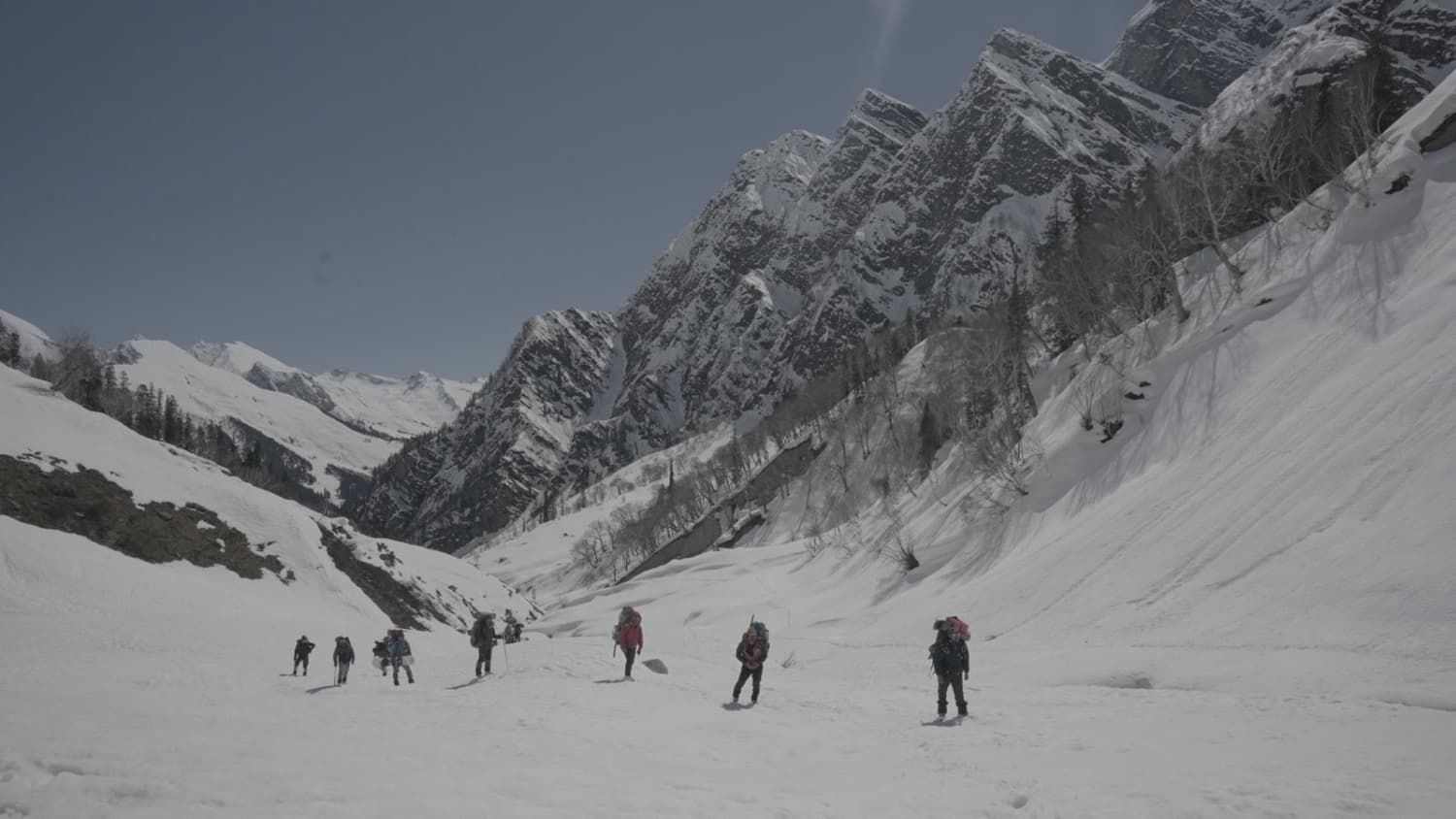
Stretching across northern India, the Indian Himalayas cover a massive and diverse range of terrain—high altitude deserts, deep glacial valleys, remote alpine basins, and sharp technical peaks that remain unclimbed or rarely attempted.
Regions such as Ladakh, Spiti Valley, Zanskar, Kinnaur, and Garhwal Himalaya still offer what many climbers believe has disappeared elsewhere:
- Remote access with no roads
- Long approaches and expedition-style logistics
- Limited rescue infrastructure
- Unpredictable weather systems
- Peaks with little or no climbing history
Here, you don’t “book a summit.”
You earn every meter.
Hundreds of Peaks, Few Climbers
One of the most overlooked facts about Indian mountaineering is this:
India has thousands of 5,500–6,800m peaks that see only a handful of ascents—or none at all—each year.
Unlike Nepal, where popular peaks receive hundreds of permits annually, many Indian peaks see:
- One expedition every few years
- Small alpine-style attempts
- No fixed ropes
- No established camps
This creates a rare opportunity for:
- First ascents
- New routes
- Lightweight alpine climbing
- Exploratory mountaineering
For serious climbers, this is not just climbing—it is contribution to mountaineering history.
Technical, Not Just Tall
The Indian Himalayas are often misunderstood as being “less serious” than the greater Himalayan giants. In reality, many Indian peaks are far more technical than higher commercial peaks elsewhere.
You will encounter:
- Steep mixed routes
- Unstable rock
- Complex glacier navigation
- Avalanche-prone faces
- Long summit pushes with no margin for error
Altitude combined with technical terrain demands:
- Solid alpine experience
- Strong judgment
- Physical endurance
- Mental resilience
These are mountains that test climbers, not tourists.
No Safety Net — Just Skill and Decision-Making
What truly defines the Indian Himalayas as the last true adventure is the absence of artificial safety nets.
There are:
- No helicopter rescues on standby
- No high-altitude porters waiting above base camp
- No fixed infrastructure
- No second chances
Every decision matters.
This environment attracts a specific type of mountaineer:
- Those who value competence over comfort
- Those who understand calculated risk
- Those who want authenticity over convenience
If you make it to the summit here, you know it was because of your skill and your team.
Cultural Depth You Cannot Separate from the Mountains
Another aspect that makes the Indian Himalayas unique is the deep cultural and spiritual connection between people and mountains.
In regions like Ladakh and Zanskar, peaks are not just geographic features—they are sacred entities. Local communities live in harmony with extreme environments, following traditions shaped by centuries of survival at altitude.
For climbers, this means:
- Greater respect for the land
- Ethical climbing practices
- Awareness that summits are privileges, not entitlements
This cultural depth adds meaning to expeditions in a way that purely commercial destinations cannot.
Why Serious Mountaineers Are Choosing White Expedition
Navigating the Indian Himalayas requires far more than basic guiding—it demands local knowledge, logistical precision, and genuine mountaineering experience.
This is where White Expedition stands apart.
White Expedition is not a mass-tour operator. It is built by professional Indian mountaineers who have:
- Completed numerous first ascents
- Climbed in alpine style
- Led technical expeditions across remote Himalayan regions
- Prioritized safety without compromising adventure
The White Expedition Philosophy
- Small teams only
- Alpine-style ascents whenever possible
- No unnecessary luxury at the cost of realism
- Strong focus on safety, acclimatization, and decision-making
- Respect for local culture and environment
For international climbers, this means you are not “buying a package”—you are joining an expedition.
Who Should Climb in the Indian Himalayas?
The Indian Himalayas are not for everyone, and that is exactly why they matter.
They are ideal for:
- Experienced alpine climbers
- Mountaineers seeking first ascents or new routes
- Climbers tired of crowded objectives
- Those who value exploration over achievement lists
If you are looking for:
- Guaranteed summits
- Comfort-heavy expeditions
- Fixed infrastructure
- Commercial climbing environments
Then these mountains are not for you.
But if you are looking for real adventure, there are few places left like this.
The Last Places Where Mountaineering Still Means Something
Mountaineering was never meant to be easy.
It was meant to be uncertain, demanding, and deeply personal.
The Indian Himalayas preserve this essence.
Here, success is not defined by standing on a summit—but by:
- The decisions you made
- The respect you showed
- The risks you managed
- The humility you carried
For serious mountaineers seeking the last true adventure, the Indian Himalayas are not an alternative.
They are the answer.
Climb With Purpose. Climb With Experience.
White Expedition — Small Teams. Big Mountains. Real Adventure.
{/* related-global-interlinks-v1 */}