Expedition Story
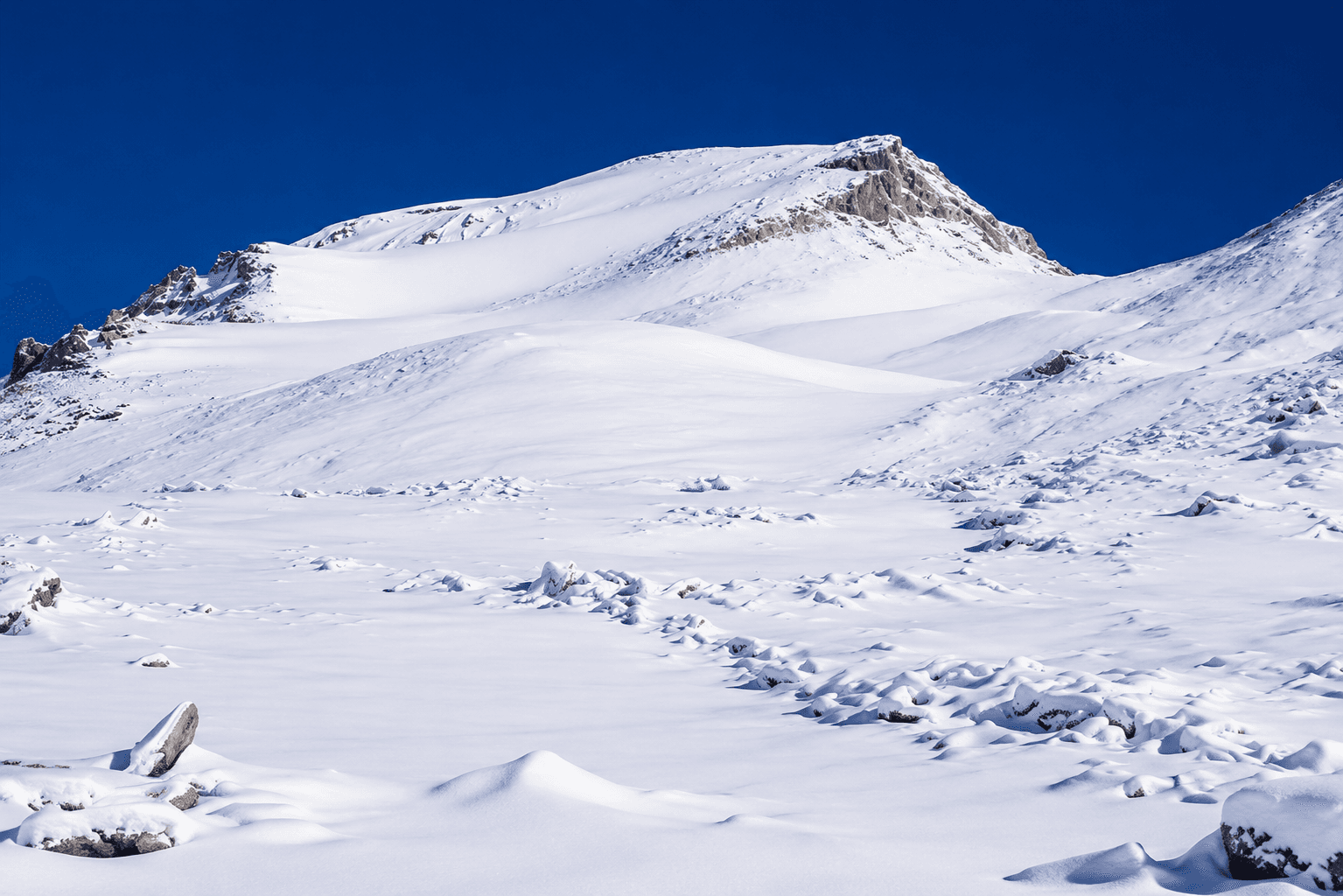
Yunam Peak in winter. Six hours, base to base.
Ricky Mountaineer’s first-person account of a reported six-hour winter climb of Yunam Peak on 7 December 2025, completed within a same-day Manali-to-Manali mission.
Yunam Peak Winter Summit: A Six-Hour Base-to-Base Ascent
Ricky Mountaineer’s first-person account of a reported six-hour winter climb of Yunam Peak on 7 December 2025, completed within a same-day Manali-to-Manali mission.
Yunam Peak Winter Summit: A Six-Hour Base-to-Base Ascent
Some mountains demand days of preparation. Some demand weeks of acclimatization. Then there are personal challenges in which the mountain gives a climber only a few hours to execute a carefully considered plan.
On 7 December 2025, Rahul “Ricky Mountaineer” Thakur climbed Yunam Peak, 6,111 metres, in winter conditions. His published account records an approximately six-hour base-to-base push: about four hours from base to summit and two hours back to base.
The mountain section was part of a larger objective—leave Manali, travel to the Yunam approach, climb and descend the peak, then return to Manali within the same day.
This is Ricky’s account of that winter ascent.
2:00 AM — Leaving Manali
The day began long before sunrise.
At approximately 2:00 AM, Ricky left Manali and drove towards Bharatpur, the road-accessible approach used for Yunam Peak near Baralacha La.
Deep winter had changed the familiar high-altitude landscape. Darkness covered the mountains, the temperature was far below freezing, and strong winds were already shaping conditions higher on the route.
There was no conventional multi-day schedule for this individual effort. The plan was direct:
Manali → Bharatpur → Yunam Peak summit → Bharatpur → Manali
The entire sequence was intended to happen within one day.
Starting the Winter Climb
After reaching Bharatpur, Ricky began the mountain section of the ascent.
Yunam Peak is normally approached as a progressive high-altitude expedition. White Expedition’s standard route includes time in Manali and Jispa, acclimatization, a move to Bharatpur Base Camp, a Summit Camp, and a longer summit day. Winter made this fast personal attempt a very different proposition.
Ricky’s account describes temperatures around −22°C with strong winds. That figure is a reported observation from this ascent, not a forecast or a temperature that should be expected on every Yunam climb.
At 6,000 metres, cold affects more than comfort. It influences dexterity, hydration, equipment, pacing, decision-making, and the time a climber can safely remain exposed. There was little room for unnecessary stops, so he kept moving.
Four Hours From Base to Summit
The ascent was fast and demanding. Winter conditions, wind, and steadily increasing altitude required complete focus.
Every step had a purpose.
After approximately four hours of climbing from base, Ricky reached the summit of Yunam Peak at 6,111 metres. Standing on the summit in winter marked the high point of the challenge, but it was not the end of it.
The wind remained strong, the temperature was reported around −22°C, and the safe return still had to be completed. He began descending almost immediately.
Two Hours From Summit Back to Base
The descent took approximately two hours, bringing the mountain section to a close.
- Base to summit: approximately four hours
- Summit to base: approximately two hours
- Total base-to-base time: approximately six hours
Six hours. Base to base. At 6,111 metres. In winter.
That was the heart of the challenge—but the wider mission was still underway.
Back to Manali on the Same Day
After returning to base, Ricky continued towards Manali.
The objective had never been only a fast summit. He had started from Manali at approximately 2:00 AM, travelled to the mountain, climbed Yunam Peak, returned to base, and then driven back towards Manali—all within the same calendar day.
That sequence is part of what distinguishes the ascent in White Expedition’s published record. The current About profile lists a six-hour Base Camp-to-Base Camp ascent, a one-day Manali-to-Manali summit expedition, and a first winter single-day ascent on 7 December. A press clipping displayed on the site also reports the winter and speed claims.
What Made the Ascent Different?
A 6,000-metre mountain in winter is never an ordinary climb. The combination of altitude, severe cold, wind, and short winter daylight makes the environment unforgiving.
The reported facts from the ascent are:
- Mountain: Yunam Peak, 6,111 m
- Date: 7 December 2025
- Style: Fast personal winter ascent within a one-day Manali mission
- Reported temperature: approximately −22°C
- Conditions: strong high-altitude winds
- Base to summit: approximately four hours
- Summit to base: approximately two hours
- Mountain time: approximately six hours base to base
The speed should not be read in isolation. Efficient movement at altitude comes from years of experience, preparation, acclimatization history, equipment familiarity, pacing, route knowledge, and knowing when to turn around.
It is not a template for a first 6,000-metre climb.
Why Choose Yunam Peak in Winter?
Ricky had spent years climbing and exploring the Indian Himalayas before this ascent. For him, the appeal was not simply to repeat the normal-season route faster. It was to see what the mountain demanded after December transformed it.
The usual crowds were gone. Conditions were harsher. Temperatures had dropped dramatically, and the mountain had become much more serious.
That seriousness was precisely what attracted him to the climb.
For prospective participants, however, the standard season and standard expedition pathway remain the relevant planning reference. White Expedition’s current Yunam Peak page describes a seven-day route designed around acclimatization and progressive movement. A winter speed ascent by an experienced mountaineer does not reduce the altitude, weather, cold, or descent risks for anyone else.
7 December 2025 — A Day to Remember
Looking back, the stopwatch is only one part of Ricky’s memory.
He remembers leaving Manali at 2:00 AM. The darkness. The freezing air. The wind hitting hard at altitude. Looking towards the summit with a single objective, then standing at 6,111 metres and knowing the hardest part was not necessarily reaching the top—it was getting safely back down.
Four hours up.
Two hours down.
Six hours base to base.
Then back to Manali.
For Ricky, it was more than a summit. It became another chapter in a longer journey through the Himalayas—one in which speed mattered only because preparation, experience, and decision-making made efficient movement possible.
What This Story Does—and Does Not—Mean for Other Climbers
Yunam Peak is often described as a comparatively non-technical 6,000-metre objective, but “non-technical” does not mean easy or safe. Its altitude, long summit effort, scree, snow, cold, and exposure demand serious preparation.
Most climbers need a measured itinerary and proper acclimatization. The standard expedition should be judged on personal experience, fitness, recent altitude exposure, medical readiness, weather, road access, and the guide team’s assessment—not on an elite climber’s stopwatch.
A Winter Chapter on Yunam Peak
Yunam Peak. Winter 2025. 6,111 metres. Approximately six hours from base to summit and back.
The numbers make the achievement easy to summarise. The deeper story is about the experience required to move efficiently, the discipline to leave the summit quickly, and the understanding that a climb is complete only after a safe descent.
The mountains continue to challenge Ricky Mountaineer. And he continues to climb.