Beginner Guide
Yunam Peak. Your first 6000m objective.
Understand why Yunam Peak (6,111m) can suit fit trekkers moving into high-altitude mountaineering, how it compares with other first-objective options, and what its beginner label does not mean.
Why Yunam Peak Can Be a First 6000m Himalayan Objective
The question is not whether Yunam Peak is universally “easy”; it is whether its route profile and seven-day format can be a sensible first 6000m step for a fit trekker with appropriate training and mountain guidance.
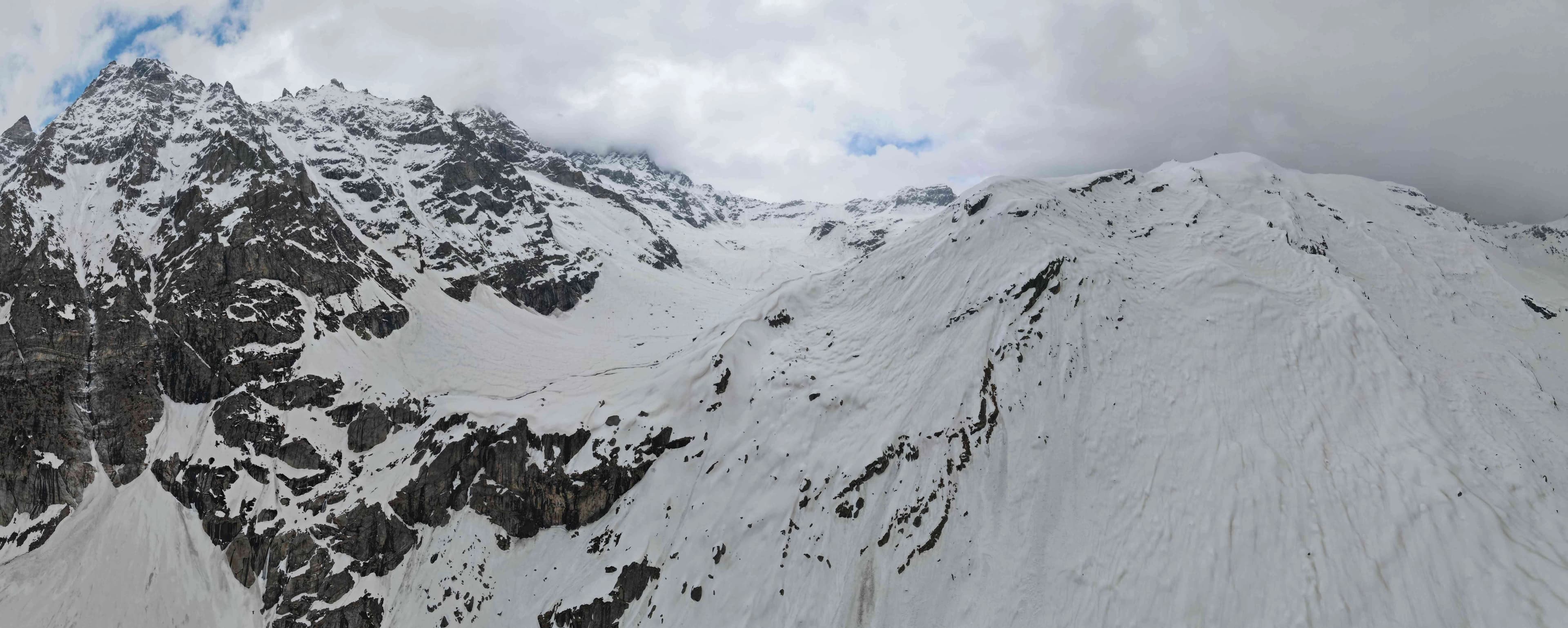
Yunam Peak rises to 6,111m in Lahaul. The current White Expedition catalogue describes it as an introductory objective with scree slopes, snow sections, and a cold summit. That makes it a bridge into high-altitude mountaineering, not a substitute for acclimatization, fitness, or an honest suitability assessment.
It is useful for climbers who want to learn how thin air, cold, snow travel, camp routines, and a summit window feel before committing to a more technical 6000m objective.
What “beginner-friendly” should mean here
“Beginner-friendly” here means an introductory 6000m profile in the catalogue—not a beginner hiking trail and not a promise of a summit.
Climbing above 6000 meters is a completely different challenge compared to trekking. At such altitude, oxygen levels drop significantly, temperatures become extremely cold, and even small climbs require much more effort.
The mountain still exposes climbers to serious altitude, cold, snow, and a demanding summit day. A guide team can manage systems and decisions, but each climber remains responsible for training, disclosure of medical concerns, and following safety calls.
The mountain provides a gradual route that helps beginners understand:
- High altitude climbing
- Acclimatization process
- Summit push strategies
- Cold weather survival
- Team expedition experience
For many climbers, Yunam Peak becomes their first real mountaineering expedition before attempting more technical Himalayan peaks.
Non-Technical Yet Challenging
Another important reason why Yunam Peak is beginner-friendly is that the mountain is not highly technical.
Unlike many other Himalayan peaks that require advanced rope work, ice climbing, or steep glacier travel, the route on Yunam Peak is mostly snow slopes and gradual high-altitude terrain.
This means climbers with good physical fitness and basic mountaineering knowledge can attempt the summit with proper guidance.
That said, Yunam Peak is still a serious high-altitude mountain. Climbers must be prepared for:
- Long summit day
- Thin oxygen levels
- Cold temperatures
- Snow and icy slopes
This combination can make Yunam Peak a useful first high-altitude learning objective for the right climber.
How Yunam compares with other first-objective options
The 6000m category groups Yunam with Kang Yatse II, Deo Tibba, UT Kangri, and Kiager Ri as options for strong trekkers stepping higher. The differences matter:
| Objective | Site-listed profile | What that means for a first-objective decision | | --- | --- | --- | | Yunam Peak | 6,111m; 7 days; introductory; scree slopes and snow sections | A compact Lahaul bridge into 6000m altitude, with a cold summit and no assumption that the route is easy. | | Kang Yatse II | 6,250m; 10+1 days; introductory; glacier travel and summit ridge | A longer Ladakh option with a classic first-6000m positioning and more time committed to the expedition system. | | Deo Tibba | 6,001m; 13+1 days; technical; crevasses and high camps | Better considered when the climber is ready for a more technical glacier-and-camp profile. | | Kiager Ri North Face | 6,100m; 6+1 days; semi-technical; glacier travel and summit camp | A shorter option near Tso Moriri, but its semi-technical label still calls for relevant skills and assessment. |
Friendship Peak is a different, lower-altitude progression: the catalogue lists it at 5,289m, seven days, and introductory, with compact logistics and snow movement. It may be a more appropriate first high-altitude objective for someone who has not yet built a 6000m base. Read the Friendship Peak difficulty guide before treating any “beginner” label as a guarantee.
Easy Access from Manali
Accessibility is another major advantage of Yunam Peak.
The expedition begins in Manali, which is one of the most popular adventure towns in India. Manali is well connected by road from major cities in North India, making it easy for climbers to reach the starting point of the expedition.
From Manali, the expedition travels toward Jispa and then to Bharatpur, which serves as the base camp for Yunam Peak.
Because the base camp is accessible by road, climbers do not need to spend many days trekking to reach the mountain. This reduces the overall expedition duration and makes Yunam Peak more convenient compared to many other Himalayan climbs.
Short Expedition Duration
Most Himalayan mountaineering expeditions take two to three weeks, which can be difficult for many people due to time constraints.
However, the Yunam Peak expedition can be completed in just seven days.
This shorter itinerary allows climbers to:
- Experience a real 6000m summit
- Learn basic mountaineering techniques
- Test their high altitude endurance
For people who want a first Himalayan summit without committing to a long expedition, Yunam Peak can be one option to assess.
Incredible Himalayan Views
Climbing Yunam Peak is not only about reaching the summit; it is also about experiencing the beauty of the Himalaya.
The mountain stands in the high-altitude desert landscape of Lahaul Valley, which is known for its dramatic scenery.
During the expedition, climbers witness:
- Vast Himalayan valleys
- High altitude plateaus
- Snow covered peaks
- Glaciers and alpine terrain
The summit of Yunam Peak offers breathtaking panoramic views of the surrounding Himalayan ranges. On clear days, climbers can see countless peaks stretching across the horizon.
Standing on the summit at 6,111 meters is a truly unforgettable experience.
Ideal for Trekkers Moving into Mountaineering
Many trekkers who complete high-altitude treks often wonder what the next step should be.
Yunam Peak can provide a useful transition from trekking to mountaineering for climbers whose experience and fitness match the objective.
If you have previously completed treks above 4000–5000 meters, climbing Yunam Peak becomes a logical progression. The expedition introduces trekkers to new challenges such as:
- Using mountaineering equipment
- Walking on snow slopes
- High altitude camping
- Summit pushes in extreme conditions
After completing Yunam Peak, climbers gain confidence to attempt more challenging mountains in the Himalaya.
Acclimatization and suitability still come first
The expedition itinerary is designed around moving from Manali through Jispa and Bharatpur before the summit attempt. Those stages support acclimatization, but they do not remove altitude risk or guarantee a successful summit.
Climbers gradually move from Manali to Jispa, and then to Bharatpur Base Camp, allowing the body time to adapt to decreasing oxygen levels.
Additional acclimatization and conservative turnaround decisions are part of responsible planning. Anyone considering Yunam should be prepared to descend or stop if the guide team judges conditions or health to be unsafe.
Guided does not mean risk-free
Although Yunam Peak is positioned as an introductory objective, any 6000m climb requires professional guidance and proper expedition support.
Experienced expedition companies like White Expedition organize safe and well-planned climbs to Yunam Peak.
Professional expeditions provide:
- Experienced mountain guides
- High altitude safety support
- Technical climbing equipment
- Proper acclimatization schedule
- Emergency protocols
These systems can improve preparation and decision-making; they cannot make the mountain risk-free or replace a climber’s fitness and judgment.
When to plan a Yunam Peak attempt
This guide identifies June to September as the preferred planning window, subject to route, weather, access, and guide-team confirmation.
During these months:
- The Manali–Leh highway remains open
- Weather conditions are relatively stable
- Snow conditions are suitable for climbing
Summer months may offer the most practical window, but a summit attempt remains dependent on conditions and the team’s decisions.
A realistic first step
Climbing Yunam Peak is more than just reaching a summit. It is an experience that challenges both the body and mind.
Standing on top of a 6000m Himalayan peak creates a sense of achievement that few adventures can match.
For a fit trekker with suitable preparation, Yunam Peak can be a clear first 6000m learning objective. The right choice depends on prior altitude experience, snow skills, available time, and the guide team’s assessment—not on the word “beginner” alone.
Climb Yunam Peak with White Expedition
If you are considering Yunam as your first Himalayan 6000m peak, use the current expedition page to review the route and ask the White Expedition team whether your experience and preparation match the objective.
With experienced guides, safety protocols, and a carefully planned itinerary, White Expedition can support preparation and on-mountain decisions; no team can guarantee a summit.
Whether you are an experienced trekker or an aspiring mountaineer, Yunam Peak can offer a meaningful introduction to Himalayan mountaineering when the objective is suitable for you.
Conclusion
Yunam Peak stands out as one possible first 6000m objective because the current catalogue combines an introductory commitment, a seven-day duration, and a route profile built around scree, snow, and a cold summit. Compare it honestly with Friendship Peak, Kang Yatse II, Deo Tibba, and Kiager Ri, then choose only after a proper suitability review.